On October 24, the Vietnamese government presented draft amendments to the Law on Environmental Protection to the National Assembly, VietnamNet and Tuoi Tre News reported. The draft defines a low-emission zone (LEZ) as a designated area where measures are introduced to reduce transport emissions and protect public health, with zone establishment tied to air-quality requirements, urban planning, traffic management and public-transport capacity.
Legislation first: high-emission and fossil-fuel vehicles in the crosshairs
The draft enshrines the principle of prioritizing controls on high-emission vehicles and those powered by fossil fuels — in practice, older gasoline and especially diesel vehicles. Zones would roll out in phases on a suitable roadmap, with feasibility, transparency and minimal disruption to businesses and daily life written in as requirements. To support the transition, the government plans preferential policies and financial incentives for public transport, renewable-fuel vehicles and low- or zero-emission vehicles. The package also proposes letting data collected directly from automatic monitoring stations serve as legal evidence for administrative penalties, with severe penalties and operating bans for organizations that manipulate monitoring software — a response to past data-falsification cases. The National Assembly’s science and environment committee endorsed the amendments, which support Vietnam’s net-zero-by-2050 target. Separately, Hanoi has been piloting a low-emission zone around Hoan Kiem Lake and the Old Quarter night market since July 1.
What this means for AIFILTECH customers
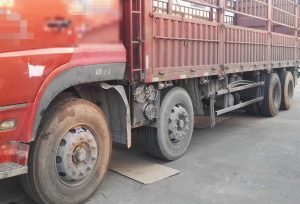
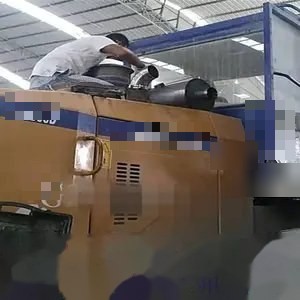
Once the law passes and implementing rules follow, the primary target will be high-emitting diesel vehicles: visibly smoky trucks inside a low-emission zone face restrictions and enforcement, and a compliant retrofit becomes the realistic way to keep operating — the same path Chinese cities took as roadside inspections intensified. Because legislation comes before city-level designation criteria and restrictions, workshops and retrofit shops have a window to build up stock and installation capability for compliant aftertreatment such as the AIFILTECH metal black smoke purifier before local rules land. And with monitoring data set to become direct evidence for penalties, visible smoke will carry real enforcement risk rather than a theoretical one; fleets running construction machinery and generator sets should also evaluate the non-road exhaust gas purifier line to stay ahead of future zone expansions.