China-III truck phase-outs are nearly done. Who is next? Hebei has given the clearest provincial answer so far: China IV.
The province has launched its autumn-winter air pollution crackdown around the goal of pushing its key cities out of the national ten most polluted, fixing this year’s numbers in advance: a PM2.5 annual mean within 37.7 micrograms per cubic metre and at least 66.9 percent good days. The hard targets each have an owner: industry answers for performance grading, transport for clean-fuel shares, the existing fleet for scrappage, dust and straw for round-the-clock patrols.
Four numbers, four ledgers
The 37.7 and 66.9 figures are the annual targets. The 90 and 50 percent figures are the transport ledger: by year-end, except in Chengde and Zhangjiakou, bulk cargo clean-transport shares in steel, coking, cement, power and coal must exceed 90 percent, and logistics parks at least 50 percent. In Tangshan, Qinhuangdao and Cangzhou ports, coal arriving at port must move entirely by clean transport, with outbound clean transport above 90 percent. The performance ledger is dated too: Hebei will consolidate Grade-A results in seven industries including steel, coking and cement, and add at least nine more Grade-A enterprises by year-end.
Thirty percent, aimed at the existing fleet
The heaviest item sits in mobile sources: by year-end, at least 30 percent of China-IV and older medium and heavy trucks, and all China-II and older non-road machinery, must be scrapped cumulatively. Over the past two years most provincial phase-out orders stopped at China III; Hebei has written China IV into the same line. The existing fleet is where the tonnage is. The order comes with supporting measures – differentiated road access for electric trucks, rerouting transit heavy diesel vehicles away from city centres, and new charging infrastructure along freight corridors – all pointing at one question for diesel vehicles still working plants and highways: replace them, or manage what they emit.
Industry: the test is stability
In industry the keyword shifts from retrofitting to running. Hebei requires key enterprises to operate steadily at ultra-low emission standards, pushes full-process retrofits and NOx system upgrades, and singles out small and medium firms and industrial clusters: proper capture hoods, sealed production processes, and converting fugitive emissions into organised, collected ones. Source-side measures such as high pellet ratios and oxygen-enriched furnace firing enter the promotion list, moving abatement upstream of the stack.
China IV makes the list too
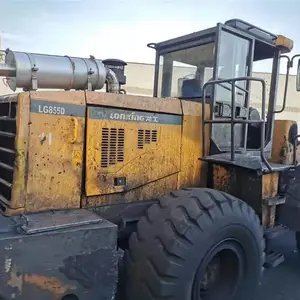
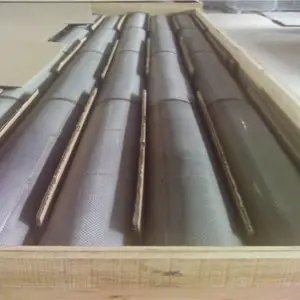
Scrappage removes the worst 30 percent; the remaining 70 percent of China-IV trucks and on-site China-II machinery still face spot inspections, and retrofit budgets are unavoidable. For non-road equipment, plant loaders can be costed against the dry metal-cartridge design of the AIFILTECH wheel loader exhaust gas purifier. On the industrial side, once ultra-low retrofits are finished the exam becomes uptime: filter service life and cleaning intervals in high-temperature streams such as sinter machine heads and blast furnace gas directly shape the emission curve, which is where the washable, regenerable AIFILTECH metal filter bag fits. Both ledgers close at year-end.