The Shanghai Municipal People’s Government issued its 15th Five-Year Plan for a Beautiful Shanghai on 1 September 2026 and published it on 15 October. The plan sets a binding target of 25.2 µg/m³ for annual average PM2.5 by 2030 and draws a clear line between equipment that must retire and equipment that must be retrofitted.
Mobile sources: retirement before retrofit
The plan calls for the full phase-out of China IV diesel trucks and tighter supervision of China V and China VI diesels, a blanket ban on Stage II non-road machinery with full lifecycle registration, and a smarter supervision platform covering periodic inspection, remote emission monitoring and vapour recovery. On transport structure, new-energy medium- and heavy-duty trucks are to reach a 30% share, port and airport non-road machinery is to be largely electrified, and new or replacement internal vehicles at key industrial sites, parks and construction sites are to go electric wherever feasible.
Stationary sources: closing out coking and cement
Shanghai requires completion of ultra-low emission retrofits in coking and cement, fuel switching for eligible oil-fired boilers and industrial furnaces, deeper VOC treatment in petrochemicals, shipbuilding and coating, and new local emission standards including one for the steel industry. For local high-temperature dust collection, that means fewer greenfield projects and more upgrades and O&M work on existing baghouses.
What it means for AIFILTECH customers
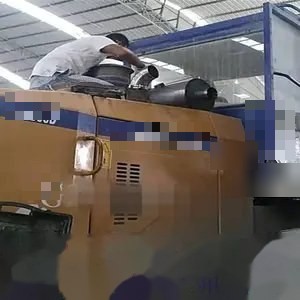
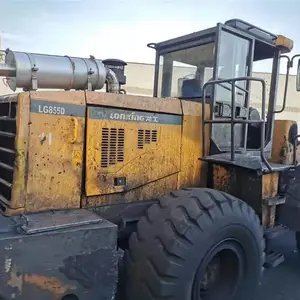
Shanghai has chosen retirement over retrofit: China IV trucks and Stage II machinery leave the fleet rather than gain aftertreatment, so remaining demand sits with China V and VI trucks, Stage III and IV non-road machines, and port or airport equipment not yet electrified. Supervision is shifting from annual testing to remote monitoring and in-service conformity, which turns backpressure, NOx sensor readings and DPF condition into traceable compliance evidence — a loaded element is now an enforcement risk, not just a loss of power. Electrification of port and airport fleets will shrink the new diesel pool, but diesel forklifts, loaders and generator sets remain through the transition, and metal DPF elements should be matched on displacement, exhaust temperature and installation envelope to keep backpressure within engine limits. With coking and cement retrofits closing out, local high-temperature filtration work moves toward upgrading existing systems and toward capacity in surrounding Yangtze Delta provinces.
Related products: non-road exhaust gas purifiers and wheel loader exhaust gas purifiers.
Prepared by AIFILTECH from the published plan; the official Shanghai text governs implementation.