Passenger cars start running under Euro 7 in four weeks. Heavy trucks are still asking for two more years.
On October 20 the European Automobile Manufacturers’ Association (ACEA) wrote to Members of the European Parliament with two requests: push the Euro 7 brake-emission requirements for heavy-duty vehicles back five years, and move the Euro 7 application dates for these vehicles back two years. The letter is signed by Karin Radstrom, chair of ACEA’s Commercial Vehicle Board and chairwoman of Daimler Truck’s management board, together with ACEA Director General Sigrid de Vries. The argument is not that the limits are too strict – it is that the testing procedures and compliance methodologies have not been finalised and validated.
Cars on 29 November, trucks in May 2028
Under the current regulation, Euro 7 applies to new passenger car and light commercial vehicle types from 29 November 2026. Heavy vehicles run on a separate schedule: new truck and bus types from 29 May 2028, all newly registered trucks and buses from 29 May 2029, and small-volume manufacturers until 1 July 2031.
If both requests were accepted, the heavy-duty timeline would shift to 2030 for new types and 2031 for all new registrations. The light-duty table is not part of the ask.
The sticking point is brakes, not tailpipes
Euro 7 is the first EU standard to regulate non-exhaust particles – brake and tyre wear – and the brake rules apply to electric trucks just the same. For cars and vans the brake limits and test conditions are already set; the heavy-duty side lags well behind. Two layers are missing: a component-level test, and a method for converting the measurement from a single brake into a whole-vehicle requirement. ACEA notes that the dedicated heavy-duty brake test cycle under the UNECE Particle Measurement Programme is itself delayed.
The variables are hard to squeeze into one cycle. Braking energy differs enormously between an empty and a fully loaded truck, and long-haul tractors, urban delivery vehicles, buses and construction machines all brake at different frequencies. A cycle must cover these differences and still produce results that independent laboratories can reproduce – otherwise a limit cannot be enforced with comparable numbers.
The limits stand; only the calendar moves
Nothing changes on the exhaust side: the heavy-duty NOx limit still drops from 460 to 200 mg/kWh, nitrous oxide enters the regulated list for the first time, and emissions must stay within limits over a longer share of the vehicle’s life. What is being negotiated is the date, not the number.
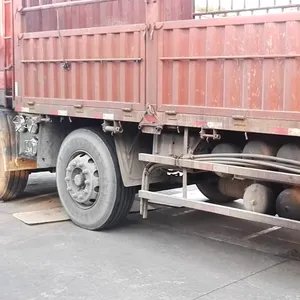
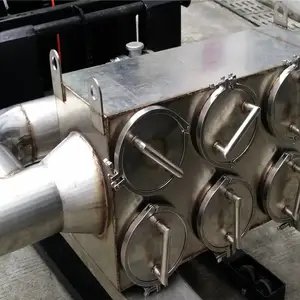
The in-use ledger should be read the other way. Euro 7 governs approvals for new vehicles; a two-year slip means trucks sold between 2028 and 2030 remain Euro VI, fleet renewal slows, and inspections do not loosen. For vehicles that will not reach a replacement cycle inside that window – port tractors, fleet trucks, standby generator sets – the emissions problem stays on the table, and retrofit remains the practical route: the dry metal-cartridge AIFILTECH truck exhaust gas purifier mounts directly on the chassis and cleans up by washing, while the AIFILTECH dry genset black smoke purifier covers generator sets. The brake-dust yardstick is still unfinished; the tailpipe yardstick is already waiting at the inspection lane.