
Forklifts and Port Tractors: Two Duty Cycles, Two Designs
An indoor forklift and a port tractor can carry the same metal filter media — but treating them as the same retrofit is the most common reason these projects get redone. One is squeezed for space and heat; the other is fighting salt air and hours of idling. One shuttles in and out of a sealed warehouse every shift; the other may go weeks between true pulls. The differences start on the first drawing.
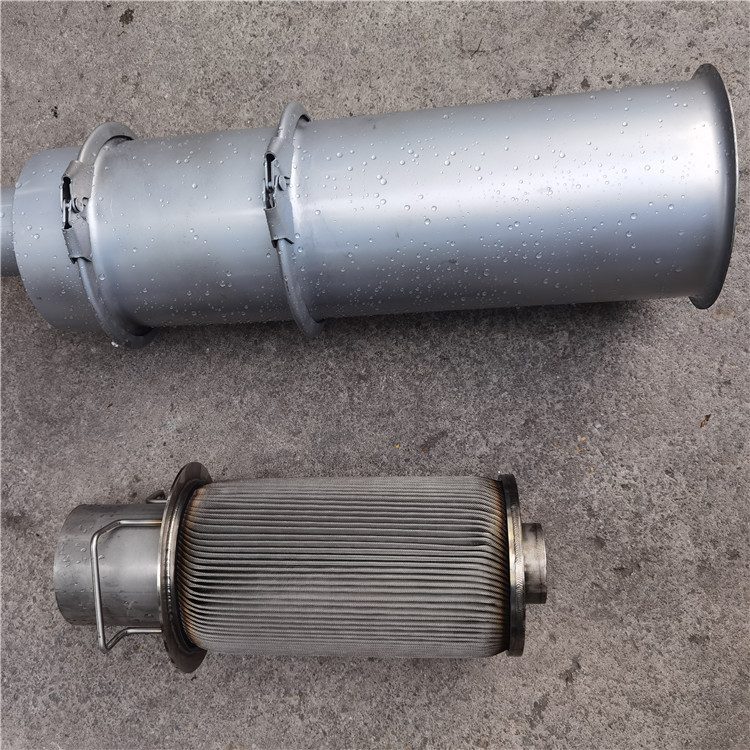
One element, two sets of constraints
| Dimension | Indoor forklift / reach stacker | Port tractor / airport GSE |
|---|---|---|
| Space | Above the overhead guard or counterweight — centimetres matter | Behind the cab or chassis-hung; comparatively roomy |
| Load pattern | Short bursts, frequent stops, low exhaust heat | Long idle at stand-by, short full-load pulls |
| Environment | Sealed warehouse; smoke and CO land on people | Salt fog, rain, wide day-night temperature swings |
| Maintenance window | Shift change; tens of minutes | Planned outage, scheduled by shift |
| The real bind | Space versus back-pressure; exhaust outlet direction | Corrosion plus long, cold idling |
Indoors, the enemy is space and heat
Indoor forklift smoke is not primarily an environmental issue — it is an occupational health one. Under a warehouse roof, CO and smoke land directly in the breathing zone of drivers and pickers, which is why food and pharmaceutical warehouses increasingly require purification on every diesel unit. The constraints are just as concrete: the space above an overhead guard is measured in tens of centimetres, element diameter and outlet direction must yield to the mast and beams, and the back-pressure budget is tighter than any outdoor machine — the turbo is never far from its limit.
Indoor acceptance often carries an unspoken clause: after the retrofit, nobody should see or smell anything. A washable metal element earns its place here twice — it filters, and it can be pulled out and washed inside a shift change, so the truck is back on the dock the next morning.
At the terminal, the enemy is salt and idle hours
A port tractor or airport tow tractor is a waiting machine: most of a shift is spent idling for a call, and the few minutes of real pulling are the exception. Cold idle gives a passive filter nothing to regenerate with — the same problem as a standby genset, with the same answer: do not design around exhaust temperature. Meanwhile the shell and fasteners must match a marine-atmosphere corrosion class, or the clouts and clamps will go long before the element does.
Our airport retrofit packages handle both at once: exteriors specified for outdoor exposure, elements chosen in corrugated metal structures that tolerate low-load duty, cleaning folded into planned outage windows.
The same element, fitted two ways
The strength of a corrugated metal element is that it is a component, not a monolith. The forklift version sits horizontal, small diameter, exhausting high and clear of the guard. The port version becomes a large vertical canister hung from the chassis, with hand holes for element removal. Same media family, entirely different periphery. The questions worth asking a supplier are not “can it be fitted” but “where does it sit, how many minutes to pull the element, and how much back-pressure margin is left”.
What the acceptance file needs
As with construction equipment, the value of a retrofit ends up on paper: measured test data is the base — our metal purifier sampled per GB 36886-2018 Table 1 Category III measured 0.34 m⁻¹ against the 0.50 m⁻¹ limit, issued by a CMA/CNAS-accredited laboratory, published on our credentials page — plus the measured back-pressure after installation and the cleaning log. For a warehouse or a terminal, that file answers both the environmental inspector and the occupational health officer.
Further reading
- Construction and Mining Equipment: Repair First, or Fit a Filter?
- Genset Emissions: Why Low Load Kills a Retrofit Filter
- Electrolyzer Materials: Titanium Felt, Nickel Felt or Porous Titanium Plate
Frequently asked questions
Can one model cover both forklifts and tractors?
The element family can be shared; the periphery cannot. Forcing one enclosure onto both classes usually ends with a unit that will not fit indoors and will not survive outdoors. Spec the shell per vehicle, the element per duty.
Anything extra for cold-store forklifts?
Yes. Bigger temperature swings mean more condensate: drain holes, fastener corrosion class and mountings that tolerate thermal cycling all need upgrading for cold-store duty.
Can it be fitted to a reach stacker?
Yes. Reach stackers have comparatively relaxed routing; most projects take a chassis-side or under-slung layout that keeps the original service access intact.
Related products
- Large forklift exhaust gas purifier — custom layouts for 3-tonne-plus trucks
- Reach stacker exhaust gas purifier — chassis-side arrangement for empty-container handlers
- Airport towing tractor purifier (A2) — multiple mounting options for GSE fleets
- Water-washable forklift black smoke purifier — element out and washed inside a shift change
Next step
AIFILTECH builds metal exhaust purification for indoor forklifts, reach stackers, port tractors and airport GSE — one element family, per-vehicle periphery. Send the vehicle model and duty cycle, and we will return a layout first. WhatsApp: +86 188 1936 6808 or bruce.wen@aifiltech.com.
{"@context": "https://schema.org", "@type": "FAQPage", "mainEntity": [{"@type": "Question", "name": "Can one model cover both forklifts and tractors?", "acceptedAnswer": {"@type": "Answer", "text": "The element family can be shared; the periphery cannot. Forcing one enclosure onto both classes usually ends with a unit that will not fit indoors and will not survive outdoors. Spec the shell per vehicle, the element per duty."}}, {"@type": "Question", "name": "Anything extra for cold-store forklifts?", "acceptedAnswer": {"@type": "Answer", "text": "Yes. Bigger temperature swings mean more condensate: drain holes, fastener corrosion class and mountings that tolerate thermal cycling all need upgrading for cold-store duty."}}, {"@type": "Question", "name": "Can it be fitted to a reach stacker?", "acceptedAnswer": {"@type": "Answer", "text": "Yes. Reach stackers have comparatively relaxed routing; most projects take a chassis-side or under-slung layout that keeps the original service access intact."}}]}