Construction and Mining Equipment: Repair First, or Fit a Filter?
A machine that fails a smoke check does not fail because it is missing a filter. It fails because combustion drifted out of the window the engine was built for — and because someone finally put an opacity meter on it. The working order is the same on every site: diagnose, repair what is broken, then decide whether a filter is needed to hold the margin. A filter bolted onto an over-fuelling engine is the most expensive way to buy a second failure.
Four checkpoints between the bid and the site
Between the day a machine is written into a quote and the day it digs, an excavator or loader passes four checkpoints, and each one can stop it:
- Bid documents. More tenders now state an emissions floor alongside price and tonnage — a Stage V or Tier 4 level requirement for imported fleets, or a local smoke limit for machines already in service. The commitment is made in writing before the machine moves.
- Mobilization inspection. Site entry commonly includes a walk-around: visible smoke at idle, an opacity reading where the site enforces one, and documentation for any device already fitted.
- On-site spot checks. Environmental inspections increasingly reach inside the fence — in several markets, construction sites and batching plants are now checked on the same lists as road vehicles.
- The re-test. A machine that fails is usually held out of service until it is rectified and re-measured. This is the checkpoint that costs real money, because the schedule slips with it.
The expensive checkpoint is the one that stops work
A failed test costs the test fee. A stood-down machine costs the pour it was digging for, the lift it was rigged for, the haul cycle that waits. Against that, a retrofit purifier and a day of fitting are small numbers — so the real question is never whether to act, but what to act on first.
The common trap is treating the filter as the first move. On a mechanically sound engine that has simply been neglected, a service — air filter, injectors, boost hoses — often restores the margin on its own, at a fraction of the cost of hardware. A filter earns its place after the engine checks out healthy and the limit is still out of reach.
What each market actually measures
| Market | Instrument | Applies to |
|---|---|---|
| China — in-use NRMM | Free-acceleration smoke opacity under GB 36886-2018; Category III limit 0.50 m⁻¹ | Excavators, loaders and cranes on registered sites |
| Bangkok / Thailand | In-use diesel smoke opacity, 20% limit since 1 Nov 2025 | Trucks and tankers hauling to and from sites |
| EU — Stage V | Type-approval of new engines: PM plus particle number | New machines; shapes which used units are worth retrofitting |
| Elsewhere | Local opacity or smoke rules; verify the current text | Confirm before committing a retrofit specification |
Where the line sits between repair and retrofit
Repair comes first when any of these is true: a restricted air filter or intake, boost that will not reach target, injector return flow out of range, a carboned EGR path, or visible oil consumption. Each of these also kills a filter — soot and ash arrive faster than any element can be cleaned.
A retrofit is the right tool after the engine checks out, when one of these remains: an emissions floor the engine was never built to meet, a contract requirement stricter than the machine’s build date, or a fleet that must keep working through a phase-out window.
Measured proof matters more than promises here. Our own reference: a metal purifier sampled by a CMA/CNAS-accredited laboratory in Foshan against GB 36886-2018 Table 1 Category III measured a light absorption coefficient of 0.34 m⁻¹ against the 0.50 m⁻¹ limit. The certificate and method are published on our credentials page — and it is the same document style we recommend every operator demand from a retrofit supplier.
What a defensible rectification file contains
When the re-test comes, the paperwork is part of the machine. A file that survives scrutiny contains: pre- and post-rectification opacity readings taken on the same instrument; what was serviced or replaced; the filter specification — element material, rated flow, back-pressure at rated flow; and the maintenance plan with its cleaning interval. A supplier who cannot produce that document set is selling hardware, not compliance.
Related products
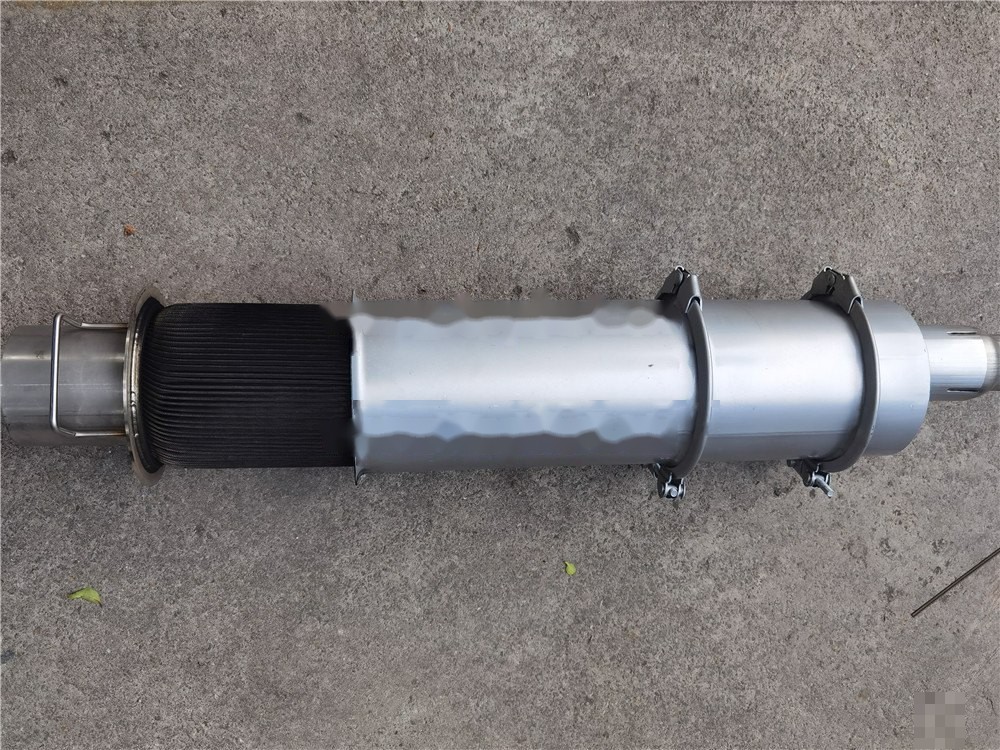
- Excavator exhaust gas purifier — sized by displacement, washable metal element
- Wheel loader exhaust gas purifier — dry and washable options for high-dust duty
- Crane exhaust gas purifier — low back-pressure layout for intermittent lift duty
- Water-washable exhaust gas purifier — element out, wash, refit; hours not days of downtime
Further reading
- Genset Emissions: Why Low Load Kills a Retrofit Filter
- Forklifts and Port Tractors: Two Duty Cycles, Two Designs
- Electrolyzer Materials: Titanium Felt, Nickel Felt or Porous Titanium Plate
Frequently asked questions
Our loader passed last year and failed this year. What changed?
Three possibilities: the limit moved, the test got stricter, or the engine drifted over twelve months of duty. Check when the current limit took effect, then work through intake, boost, injection and compression in that order. The filter discussion comes last.
Can a filter make a worn engine pass?
No. A filter traps what leaves the cylinder; it cannot compensate for oil burning or over-fuelling. With the internal faults unresolved, the element blocks within days. Any supplier promising a guaranteed pass is overselling.
How often does a washable element need cleaning in quarry dust?
On trend, not on a calendar. Log back-pressure at rated flow: a slow rise means ash is building and a wash can be scheduled; a sudden rise means the element is blocked or the engine has started over-fuelling again. A metal element is washed out and refitted, so the outage is measured in hours.
What do we need to provide to start a retrofit?
Engine make, model and rated power; the latest smoke or emissions reading; the limit your market or contract requires; the available installation space and exhaust routing; annual operating hours. With those five items we confirm technical feasibility before any commercial discussion.
Next step
AIFILTECH manufactures metal black-smoke purifiers and washable retrofit systems for in-service construction and mining equipment. Send the details above and we will tell you whether a retrofit is technically suitable before any commercial discussion. WhatsApp: +86 188 1936 6808 or bruce.wen@aifiltech.com.
References: GB 36886-2018 (limits and measurement method for exhaust smoke from in-use non-road diesel machinery); Bangkok 20% smoke opacity limit effective 1 November 2025. Limits are quoted as published and are subject to local revision.