
Generator Exhaust Retrofit Case: Jiangmen, Guangdong
Dual DOC + 24-core metal DPF removes black smoke and CO in one system
Generator exhaust treatment usually faces a double challenge: eliminating visible black smoke (particulate matter, PM) while also removing colourless but toxic carbon monoxide (CO). A single-function device rarely handles both. For this project AIFILTECH engineered a TKPD-24 combined purifier — dual DOC + 24 metal filter cores + emergency bypass valve — for a large diesel genset in Jiangmen, Guangdong. After the retrofit the stack shows no visible smoke, CO and HC are sharply reduced, and power generation was never interrupted.
Project at a glance
| Location | Jiangmen, Guangdong Province, China (client name withheld on request) |
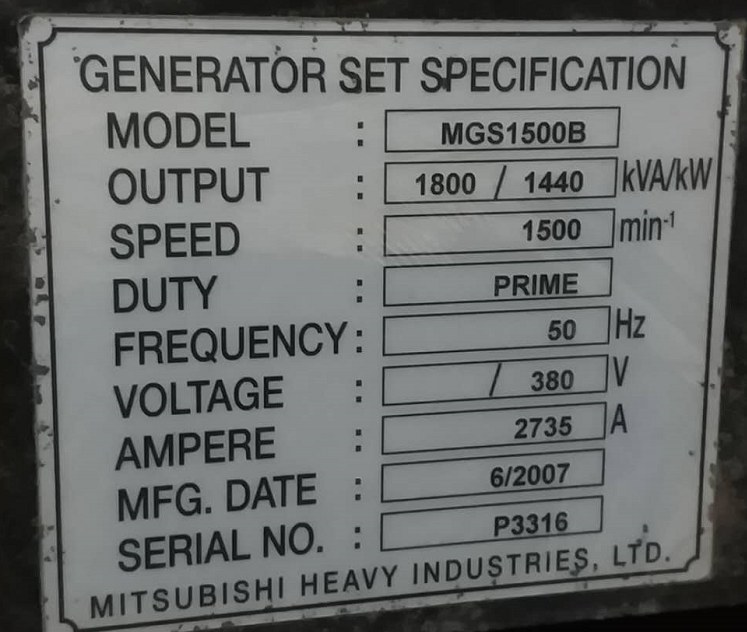
| Generator | Mitsubishi Heavy Industries MGS1500B diesel generator set |
| Rated output | 1800 kVA / 1440 kW, PRIME duty |
| Solution | TKPD-24 combined purifier: dual DOC + 24 metal filter cores + emergency bypass valve |
| Result | No visible black smoke, CO/HC sharply reduced, full load capability unchanged |
1. Project overview
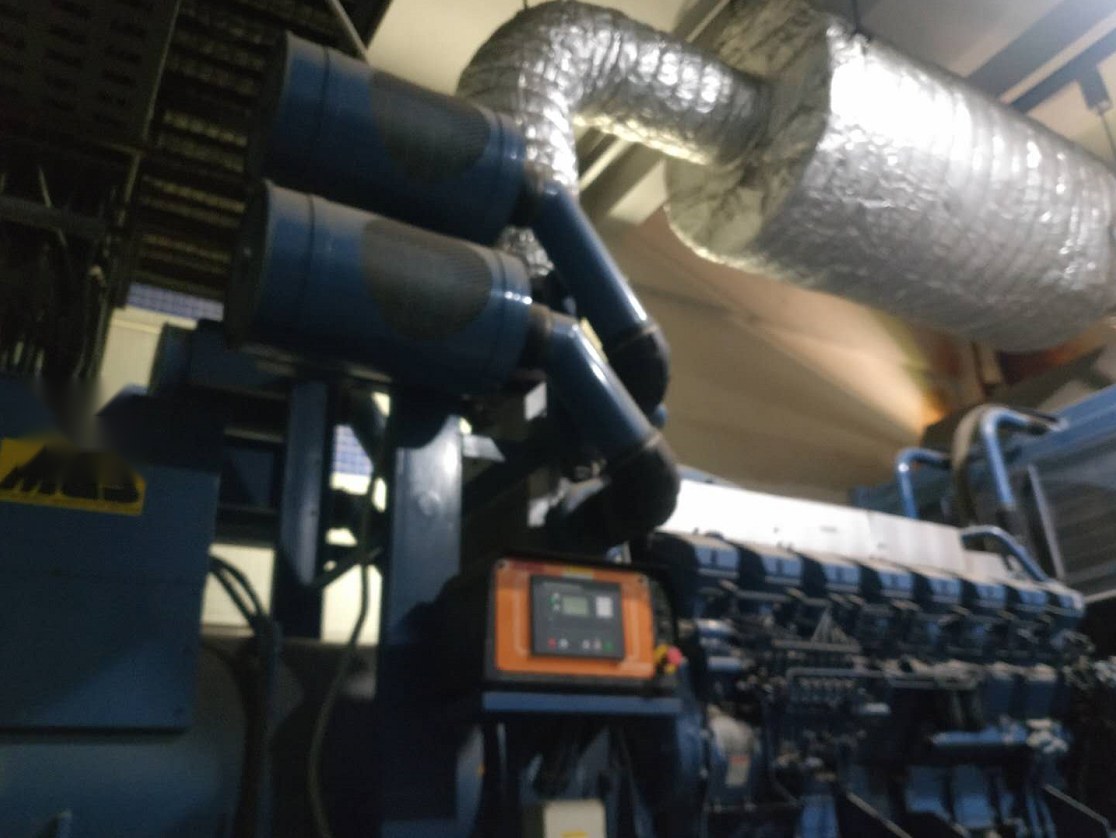
The plant is a manufacturing site in Jiangmen where the genset carries production load — a classic “production-grade standby” duty: started on schedule, and expected to take load the moment the grid falters. Before the retrofit the stack showed obvious black smoke with a sharp odour, workshop air quality suffered, and the site was repeatedly flagged in environmental inspections.
- Generator: Mitsubishi Heavy Industries MGS1500B diesel generator set
- Rated output: 1800 kVA / 1440 kW
- Speed / frequency: 1500 rpm, 50 Hz
- Voltage / current: 380 V / 2735 A
- Duty: PRIME, continuous load
- Condition before retrofit: heavy black smoke, high CO and odorous gases, non-compliant
2. The challenge: smoke and CO had to go together
The difficulty was never “removing smoke” alone. Three conditions had to hold at once: no visible smoke, no odour, and not a second of lost power.
Challenge 1 — Particulate matter. Under high load the genset smoked visibly. Black smoke is the most obvious and most frequently cited finding in an inspection; while the stack still shows colour, no explanation carries much weight.
Challenge 2 — Gaseous pollutants. CO is colourless, toxic and odorous. A conventional DPF captures soot but does nothing for CO — which is why many retrofits fix the smoke and leave the smell behind.
Challenge 3 — Power supply cannot be interrupted. The genset carries production load. Any device that raises backpressure too far risks derating or a shutdown, and that loss dwarfs the pollution problem. Every design decision has to leave the power supply a way out.
Limits of the previous solution. The client had been running a water-filter type purifier, which only wets and settles part of the particulates. It cannot touch CO, and it brings wastewater, winter freeze-up risk and heavy maintenance. Years of use left the smoke unsolved and added a wastewater bill.
3. The solution: TKPD-24 combined purifier
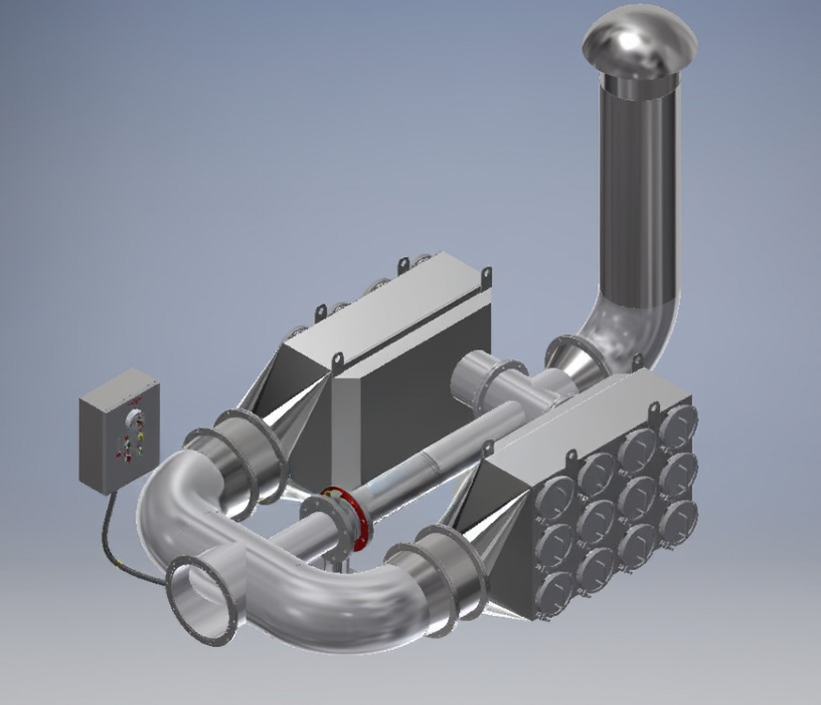
To remove smoke and CO without endangering generation, AIFILTECH integrated three stages in a single vessel:
- Dual DOC oxidation catalysts: oxidise CO and HC into CO2 and water and remove the odorous fraction. A single DOC stage runs out of capacity on a large genset; two stages in series are required at these CO concentrations.
- 24 metal filter cores (metal DPF): capture the soot so that no smoke is visible at the stack. Metal cores tolerate heat and vibration, can be cleaned and regenerated, and keep long-term maintenance cost low.
- Emergency bypass valve: opens automatically when backpressure reaches the set point, guaranteeing the genset keeps generating under any condition — power supply safety comes first.
The division of labour is clean: dual DOC handles the gas, metal cores handle the smoke, the bypass protects the power. The result meets emission requirements while protecting both operations and employee health.
4. Specifications and installation
| Item | Specification |
|---|---|
| Model | TKPD-24 combined purifier |
| Application | Diesel genset exhaust (PM + CO/HC) |
| Filter stage | 24 metal filter cores (metal DPF) |
| Catalyst stage | Dual DOC oxidation catalysts |
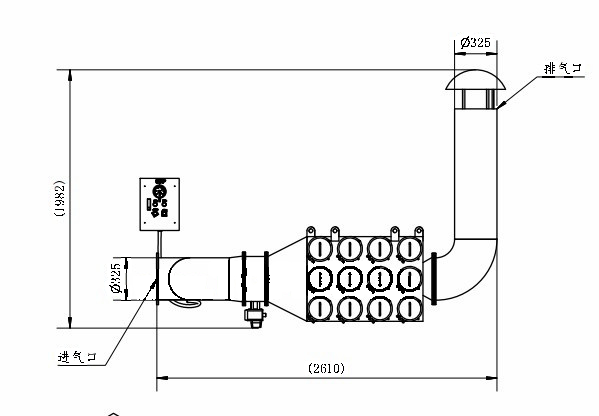
| Inlet / outlet diameter | 325 mm |
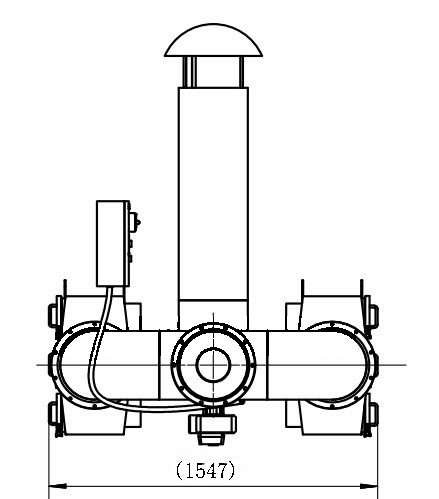
| Overall dimensions (L×W×H) | Approx. 2610 × 1547 × 1982 mm |
| Safety | Emergency bypass valve + control box |
| Stack outlet | Rain-cap exhaust |
The unit flanges onto the genset exhaust. Gas passes through the dual DOC stages and the 24 metal cores, then discharges through the rain-cap stack. The control box monitors backpressure and opens the bypass automatically at the set point, so the risk of a blocked system never reaches the generator.
5. Results
- No visible black smoke: particulates captured by the 24 metal cores
- Sharp reduction in harmful gases: dual DOC oxidises CO and HC, workshop odour clearly improved
- Emission compliance: the site passes environmental checks, removing penalty and complaint risk
- Zero impact on generation: the emergency bypass kept the set running at load throughout
- Healthier workplace: employees are no longer exposed to smoke and CO
6. Typical applications
The TKPD series suits any high-power diesel genset that needs combined PM + CO treatment and cannot compromise on power continuity:
- Factory captive and standby generator sets
- Data centre backup power
- Hospital emergency generators
- Commercial complexes and hotels
- Telecom base stations and temporary event power
Standby sets that run at low load behave differently from continuous-duty machines; the selection logic is covered in Genset emissions: why low load kills a retrofit filter.
7. FAQ
How do metal cores compare with ceramic DPFs?
Metal cores tolerate high temperature and vibration, which suits gensets with frequent starts and load swings. They can be cleaned and regenerated instead of replaced, so maintenance is simpler and long-term cost lower.
Why two DOC stages instead of one?
Genset exhaust carries high CO and HC concentrations. A single DOC runs out of oxidation capacity; two stages in series ensure the gaseous pollutants and the odour are removed and the gas-phase limits are met.
Does the bypass valve cause excess emissions?
The bypass is a protection mechanism for extreme conditions only: when backpressure reaches the set point it opens to keep the set generating. After routine core cleaning the backpressure returns to normal, the valve closes automatically, and all exhaust goes back through the purification path.
Is maintenance burdensome?
No. Metal cores are cleaned and regenerated rather than replaced, and the control box monitors backpressure and raises a maintenance prompt when the threshold is reached.
Further reading
- How a washable metal DPF works: airflow and the 25 kPa regeneration threshold
- Metal DPF maintenance: washing intervals and troubleshooting
- Patents and test reports
Related products
- Multi-core metal filter dry purifier
- 12-core genset purifier with bypass butterfly valve
- 20-core large dry genset black smoke purifier
- DOC + SCR + DPF + ASC exhaust gas purifier
Next step
If your generator set has the same smoke and CO problem, or you are preparing evidence for an inspection, send us the rated power, the duty and the local limits and we will start with the technical proposal. WhatsApp +86 188 1936 6808, email bruce.wen@aifiltech.com, or send an enquiry.
Note: generator data taken from the unit nameplate; dimensions are measured values, final delivery per drawing. The client name is withheld at the owner’s request; site photos are used with permission.