
Generator SCR Retrofit Case: Cement Plant, Guangdong
——Urea-SCR Denitration for a 300 kW Standby Genset
Ultra-low emission retrofits are advancing across China’s cement industry, and supervision of on-site diesel machinery and standby power sources is tightening. In this project, AIFILTECH equipped a 300 kW Shuangma SMKP-300GF standby diesel genset at a cement plant in Guangdong with a urea-SCR exhaust purification system: BOSCH urea dosing + SCR catalytic reduction + closed-loop NOx sensor control — without touching the engine or the emergency start-up logic.
Project Snapshot
| Location | A cement plant in Guangdong (name withheld at the owner’s request) |
| Genset | Shuangma SMKP-300GF diesel genset (300 kW standby power) |
| Solution | Urea-SCR system (BOSCH dosing + Dinies-coated SCR reactor + closed-loop NOx control) |
| Objective | NOx compliance capability with emergency power reliability untouched |
1. Project Overview
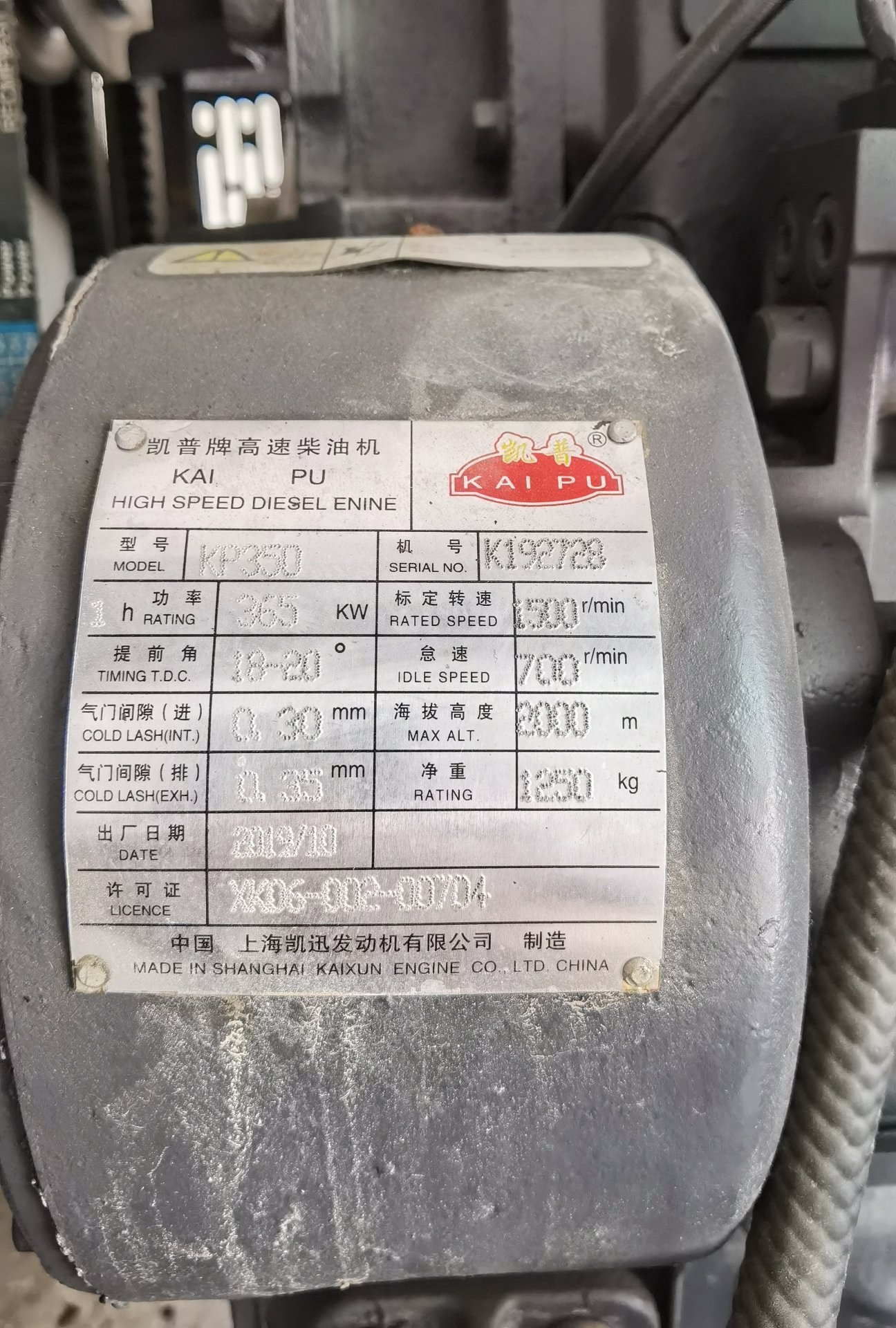
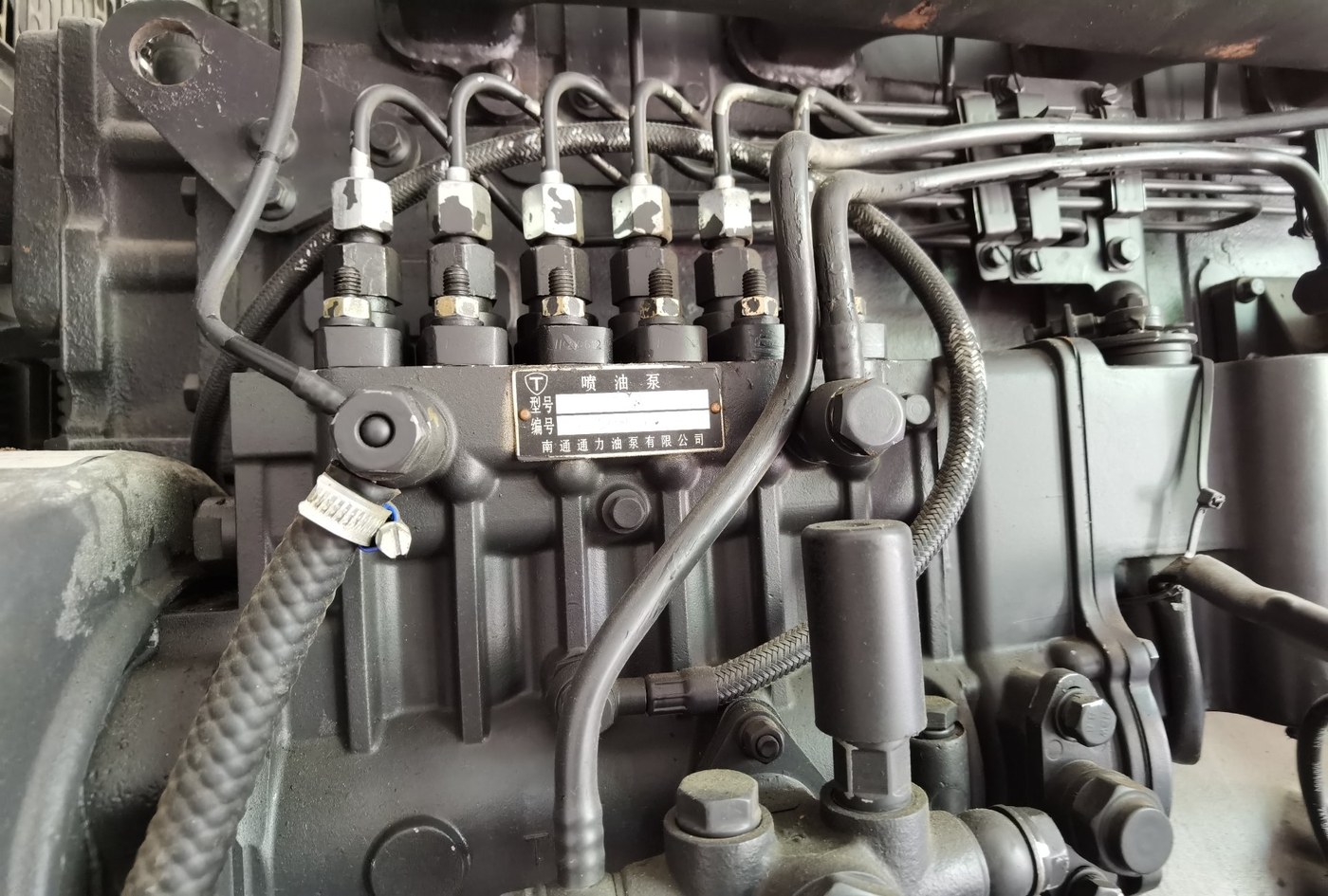
The plant operates a diesel genset as standby power for the kiln line and plant security loads during grid maintenance, peak-shaving outages and emergencies. The unit treated in this project is a Jiangsu Shuangma SMKP-300GF diesel generating set: rated power 300 kW, rated voltage 400/230 V, rated current 540 A, power factor 0.8, rated speed 1500 rpm, powered by a KAIPU KP350 high-speed diesel engine (1-hour rating 365 kW) with a SMI-300-4 alternator.
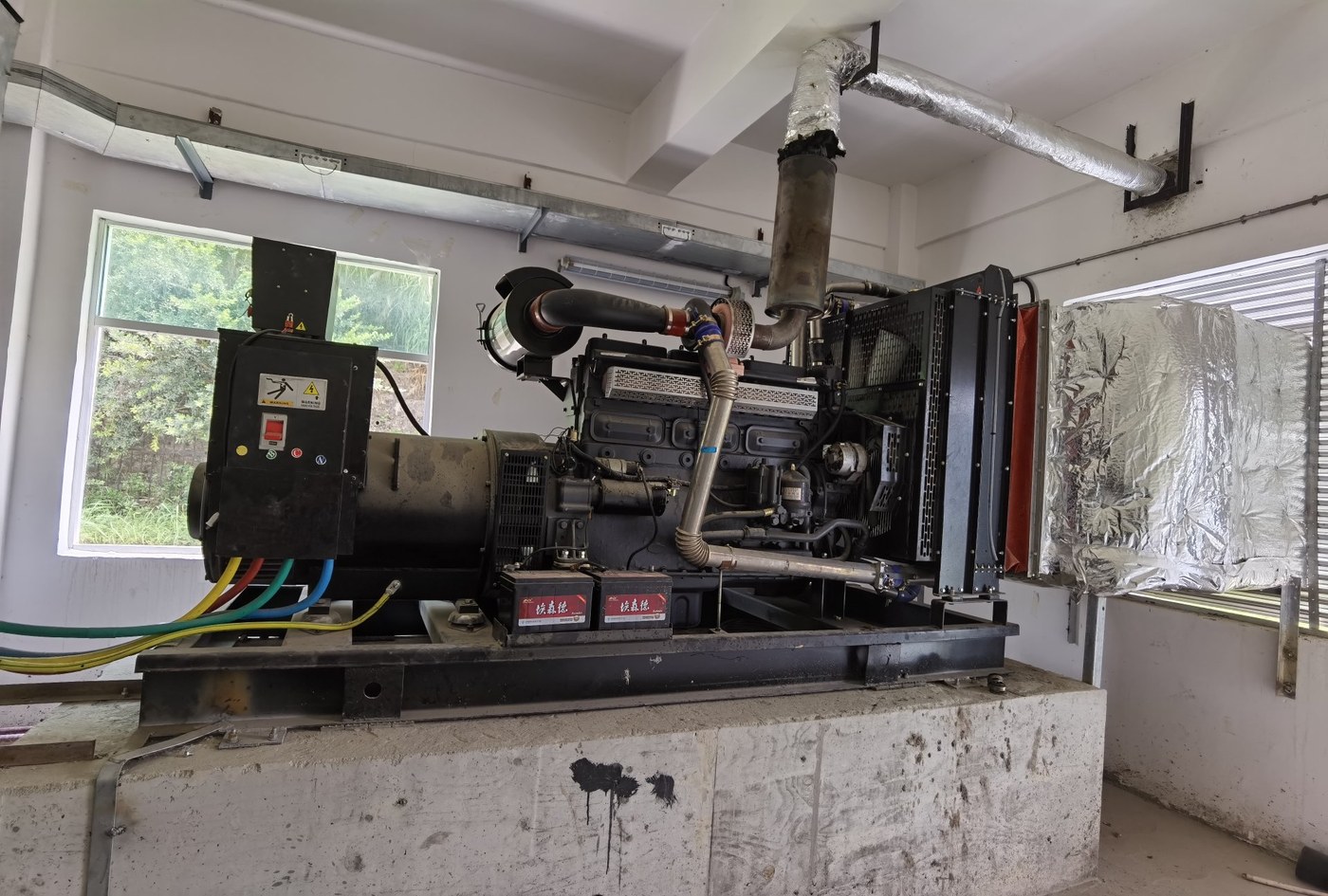
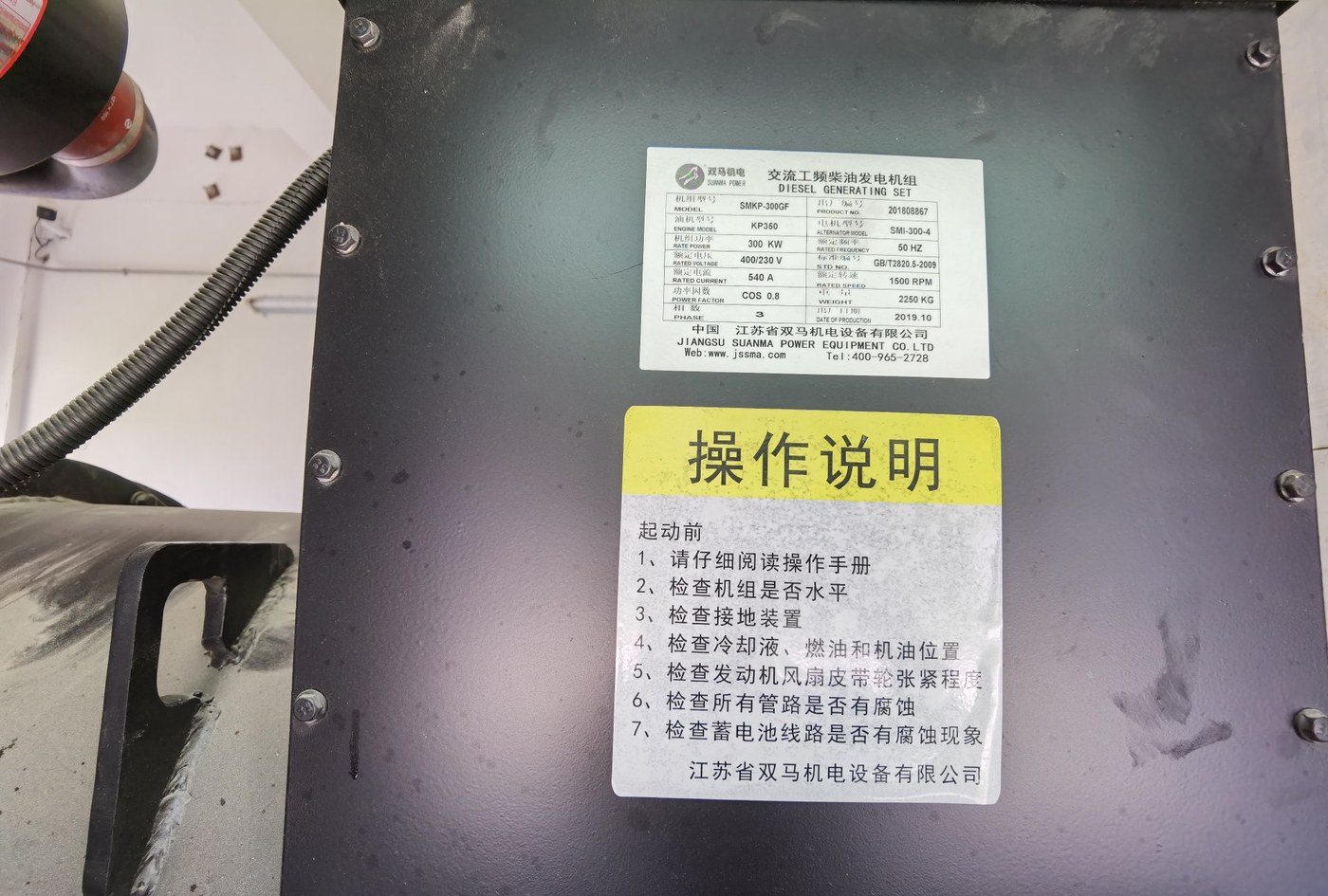
The unit has been in service for years with no exhaust after-treatment: smoke is visible at start-up and under load, and NOx is uncontrolled. As ultra-low emission retrofits advance across the cement industry, the plant’s standby power source directly shapes its overall compliance image. The owner required emission treatment that would not compromise the reliability of the emergency power supply.
2. Key Challenges
- No NOx control: the unit dates from an early non-road era, with high raw NOx emissions and no in-use compliance path;
- Low load factor and low exhaust temperature: a standby unit runs only during tests and emergencies; low exhaust temperature narrows the SCR catalyst activity window and raises urea crystallization risk;
- Constrained engine room: the reactor had to be custom-sized to the existing room and piping layout;
- Reliability red line: the retrofit must not affect emergency start-up or load capability, and installation could only proceed during downtime windows;
- Industry trend: cement plants are a key target of ultra-low emission retrofits, and even small standby gensets shape the plant’s overall emission image.
3. Solution: Urea-SCR Denitration System
For this project AIFILTECH supplied a urea-SCR exhaust gas purification system. The hard part of SCR is not the reactor; it is metering and mixing the urea: injection pulse width is calibrated against exhaust temperature and flow, a mixing section ensures even atomization, and the nozzle position is tailored to the casing layout to reduce wall crystallization. The reactor is sized by space velocity, the catalyst is selected as vanadia or zeolite against the operating temperature band, and insulation is added for low-load duty.
System configuration:
| No. | Item | Specification | Manufacturer | Qty | Remarks |
|---|---|---|---|---|---|
| 1 | BOSCH injection system | — | BOSCH (Germany) | 1 set | Sized for the 300 kW genset |
| 2 | NOx sensor | — | Continental (Germany) | 1 pc | Real-time NOx feedback, closed-loop control |
| 3 | Urea tank assembly | — | — | 1 set | — |
| 4 | SCR catalytic reactor (SCR) | Dinies coating | Dinies (Germany) | 1 unit | Dia. 345 × 1100 mm; size adjusted to actual site conditions |
| 5 | Intake temperature & pressure sensor | Optional, per site decision | — | 1 pc | — |
| 6 | Engine exhaust temperature sensor | PT100 | — | 1 pc | — |
| 7 | Ambient temperature sensor | Optional, per site decision | — | 1 pc | — |
| 8 | Complete wiring harness | Customized to site | — | 1 set | — |
| 9 | Control cabinet (power converter) | Customer may self-purchase | — | 1 set | — |
| 10 | Urea liquid lines & connectors | — | — | 1 set | — |
Control logic: the PT100 exhaust temperature sensor and intake temperature/pressure sensor serve as inputs. Once exhaust temperature enters the catalyst activity window, urea is dosed against the NOx target; dosing stops automatically when temperature is insufficient, preventing ammonia slip and crystallization at the source. The NOx sensor provides real-time feedback for closed-loop correction.
4. Key Data
| Item | Parameter |
|---|---|
| Genset model | Shuangma SMKP-300GF diesel generating set |
| Rated power | 300 kW |
| Rated voltage / current | 400/230 V / 540 A |
| Frequency / speed | 50 Hz / 1500 rpm |
| Power factor | 0.8 |
| Engine | KAIPU KP350, 1-hour rating 365 kW |
| Alternator | SMI-300-4 |
| SCR reactor | Dinies (Germany), Dia. 345 × 1100 mm (adjusted to site) |
| Injection system | BOSCH injection system (for the 300 kW genset) |
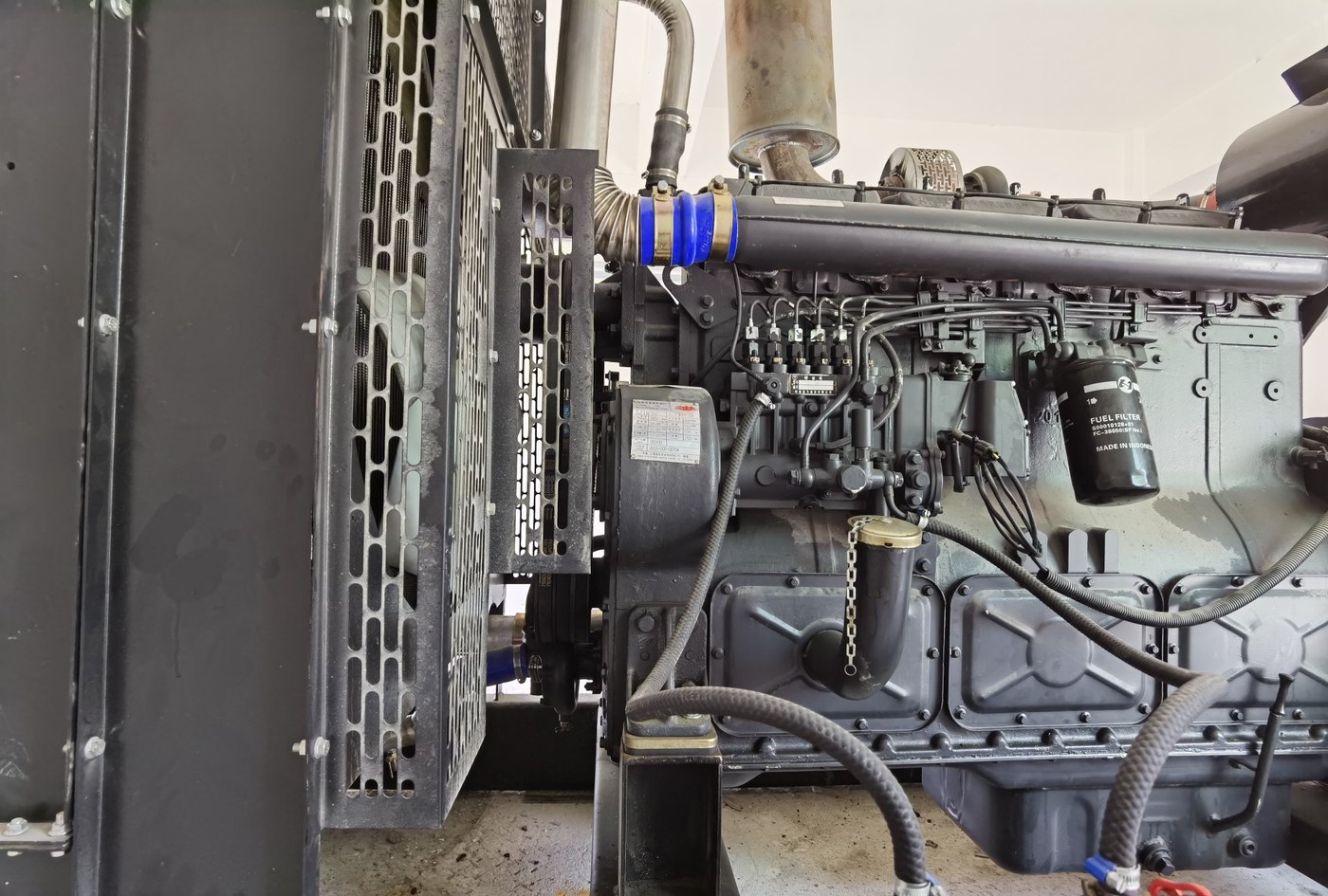
5. Implementation & Delivery
- Site survey: exhaust outlet diameter, exhaust temperature profile, available room space and piping routing;
- Custom design: reactor dimensions and nozzle position fixed to site conditions (Dia. 345 × 1100 mm as the baseline, adjusted to actual conditions), harness customized to the room;
- Installation in downtime windows: no modification to the engine or the emergency start-up logic; clamp-type connection;
- Commissioning: injection pulse width calibrated against exhaust temperature and the NOx target, closed loop engaged;
- Delivery support: third-party testing can be arranged to verify results.
The control cabinet (power converter) is self-purchased by the customer; AIFILTECH provides wiring definitions and commissioning support to keep the budget down.
6. Results & Value
- NOx compliance: the labeled NOx purification rate reaches 90% under standard conditions; actual results vary with exhaust temperature, load factor and fuel quality, and third-party testing confirms the outcome after delivery;
- Imported core components: BOSCH injection system, Continental NOx sensor and a Dinies-coated (Germany) SCR reactor — all key components are international brands, ensuring reliability and spare-parts availability;
- Power reliability untouched: no modification to the engine or emergency start-up logic;
- Extensible: for combined control of black smoke and CO, the system can be extended with a DOC, metal DPF and ASC into an integrated after-treatment train (see the DOC+SCR+DPF+ASC purifier page).
7. Where It Applies
The scheme suits any diesel genset serving as standby power where NOx and smoke must be controlled: cement and building-materials plants, mines, ceramic and glass factories, data centers, hospitals, airports and ports. AIFILTECH provides sizing calculation, custom design, installation and commissioning as a full-service package.
8. FAQ
A standby genset rarely runs — is SCR really necessary?
Yes. Emissions during test runs and emergency operation are equally regulated, and an emergency-loaded standby unit usually runs at full load, releasing smoke and NOx in a concentrated burst. AIFILTECH’s scheme keeps the SCR effective under low-load duty through insulation and temperature-gated dosing.
Is the SCR reactor size fixed?
No. Dia. 345 × 1100 mm is the baseline; the reactor size is adjusted to the actual exhaust duct, engine-room space and exhaust temperature profile, and the nozzle position and wiring harness are likewise customized on site for an exact match with the genset.
How is urea crystallization prevented?
Three lines of defense: injection pulse width calibrated against exhaust temperature and flow, with dosing suspended when temperature is insufficient; a mixing section for even atomization; nozzle position tailored to the casing layout to reduce wall films and crystallization.
Will the SCR retrofit affect power generation?
No. The engine and emergency start-up logic remain untouched; the SCR reactor (Dia. 345 × 1100 mm) is designed for low back pressure with no material effect on output. Installation is completed in downtime windows.
Further Reading
- Genset emission control: why the purifier still fails the inspection — sizing logic for low-load standby duty
- Generator exhaust retrofit case: Jiangmen, Guangdong — dual DOC + 24 metal cores for smoke and CO
Next Step
If your standby genset faces NOx control requirements or compliance pressure, send us the genset rating, duty and local emission targets — we provide the technical proposal before any pricing. WhatsApp: +86 188 1936 6808, email: bruce.wen@aifiltech.com, or use our online form.
Note: genset data are taken from the nameplates; the SCR reactor size is the baseline configuration and is finalized after the site survey. The customer name is withheld at the owner’s request; site photos are published with permission.