China’s Ministry of Ecology and Environment published national air quality figures for September and for January-September 2026 on October 26. The nine-month trend still points down: PM2.5 across 339 cities averaged 24.9 micrograms per cubic metre, 3.9 percent lower year on year; PM10 was 42 micrograms, down 6.7 percent; ozone 139 micrograms, down 2.8 percent; nitrogen dioxide 15 micrograms, down 11.8 percent. Good days accounted for 86.6 percent of the period, up 2.8 percentage points, while days at heavy pollution or worse fell 0.4 points to 0.7 percent.
The nine-month trend is down; September went the other way
Split out September and the direction flips. National PM2.5 averaged 19.0 micrograms, up 18.8 percent year on year; PM10 reached 35 micrograms, up 12.9 percent; ozone hit 140 micrograms, up 17.6 percent. Good days fell 3.5 points to 92.3 percent. Both statements are true at once: the emission reductions banked during the 14th Five-Year Plan are still working, but concentrations rebound faster than expected once weather turns unfavourable.
Regions diverge: the delta falls, the Beijing cluster rises
In the Beijing-Tianjin-Hebei and surrounding “2+36” cluster, PM2.5 averaged 37.0 micrograms for January-September, up 12.1 percent, with good days at 68.4 percent (up 0.9 points) and heavy pollution at 0.9 percent (up 0.1 points). September was worse: 28.7 micrograms, up 32.9 percent, and good days down 18.2 points to 72.0 percent. Over the same nine months the Yangtze River Delta’s 31 cities averaged 28.0 micrograms, down 5.4 percent, with good days at 81.6 percent; the Fenwei Plain averaged 31.7 micrograms, up 1.9 percent, with good days at 73.1 percent. One scorecard, three different curves.
The yardstick moved too: 25 micrograms, not 35
The definition of a good year tightened underneath these numbers. GB 3095-2026, in force since March 2026, cuts the annual PM2.5 secondary limit from 35 to 25 micrograms per cubic metre. A national average of 24.9 looks compliant but leaves 0.1 micrograms of headroom, while the Beijing cluster’s 37.0 sits 48 percent above the new ceiling. Days that once counted as compliant may no longer count, and the remaining pressure lands on industrial sources that are still short of the last increment.
What this means for AIFILTECH customers
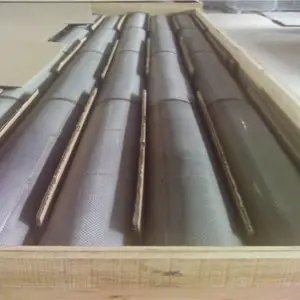
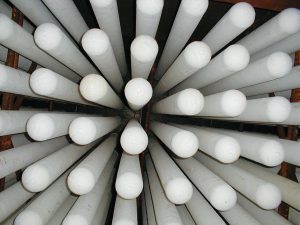
Ultra-low emission retrofits already cover 940 million tonnes of crude steel, 360 million tonnes of coking and 470 million tonnes of cement clinker capacity, so the question has moved from whether to retrofit to whether the retrofit holds — and these figures show where it slips: at low load, during frequent starts and stops, and whenever temperature swings into the condensation range, all without any warning in the stack reading. Particulate matter is the stage that is easiest to guarantee and easiest to lose, and AIFILTECH metal filter bags hold outlet emissions below 5 mg/Nm3, resist hydrolysis and can be washed and reused, which suits kilns and boilers that cycle often. For the hot end of cement kilns and coke oven gas, compare the temperature rating and thermal-shock behaviour of MULCERAFIL ceramic fiber filter tubes before settling on an integrated design. Ahead of the heating season, a structured check of bag and tube differential pressure, breakage and blinding pays back more than pushing load during an alert.