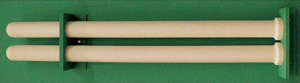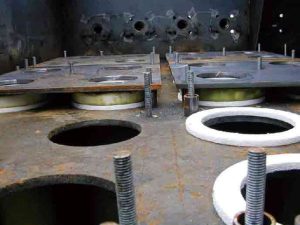
Sinomach reported on October 21 that the integrated ceramic catalyst fiber filter tube cleaning project for the Shandong Changyu glass kiln, executed by its China National Heavy Machinery Research Institute, has been successfully commissioned, with all pollutant emission concentrations meeting the required limits. The project converted the existing electrostatic precipitator into an integrated filter tube unit that combines high-efficiency dust filtration with denitration in a single high-temperature element, achieving integrated SO2-dust-NOx control.
Why a filter tube retrofit beats a full ESP + SCR chain
Glass furnace flue gas runs hot, fluctuates widely, and carries fine, sticky dust. The conventional chain of ESP, wet desulfurization, and SCR demands multiple vessels, large footprints, and risks condensation and bag blinding in the low-temperature sections. Ceramic catalyst fiber filter tubes perform filtration and catalytic reduction inside one heat-resistant element, eliminating flue gas reheating. For existing plants this means a shorter retrofit cycle and a much smaller footprint — exactly what this project demonstrates for the glass industry’s ultra-low emission upgrades.
What this means for AIFILTECH customers
First, if your glass, coking, or metallurgical furnace still runs on an ESP or baghouse, a filter tube retrofit does not require rebuilding ductwork and foundations — the integrated unit can sit where the ESP was, cutting duplicated investment. Second, merging dust removal with denitration removes the SCR reactor and reheating system, which typically lowers lifetime operating cost; pulse-jet regeneration extends element service life, so filtration media life is the parameter worth scrutinizing when specifying. Third, for high-temperature furnace gas, focus on the element’s continuous temperature limit and catalyst activity retention in sulfur- and alkali-laden streams, not just initial filtration efficiency.
AIFILTECH’s MULCERAFIL ceramic fiber filter tube high-temperature gas filter and ceramic filter tube dust collector are engineered for exactly this kind of integrated dust-and-NOx duty in glass kilns, coking plants, and non-ferrous smelters.