Per the Guangxi Zhuang Autonomous Region government portal, the Beautiful Guangxi 15th Five-Year Plan (document Guizhengfa (2026) No. 37, issued September 30 and made public in late October) states in its Beautiful Blue Sky program column: complete ultra-low emission retrofits for more than 90 million tonnes of cement clinker capacity and more than 1 million tonnes of coking capacity, support 2-3 key cities in building model clean-air programs, and build an integrated air-quality supervision platform. The China Cement Network reported the plan on October 26.
Retrofits run parallel with inspections of legacy equipment
Beyond the capacity targets, the plan deepens performance-graded management of key industries, pushes ultra-low retrofits in cement, steel and coking, upgrades traditional industrial clusters, and — notably for plant operators — mandates inspections to identify and retire low-efficiency or ineffective air-pollution control equipment. On mobile sources, it requires faster phase-out of China-IV and older trucks and of China-II-and-below non-road machinery, with clean transport share in key industries no lower than 75 percent. The plan’s indicator table sets an urban PM2.5 target of 24.2 micrograms per cubic meter by 2030.
What this means for AIFILTECH customers
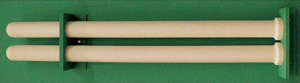
A provincial plan that hard-codes 90 million tonnes of clinker and 1 million tonnes of coking into its targets means cement and coke plants in Guangxi enter a concentrated retrofit cycle over the next five years — budgeting for end-of-pipe upgrades early beats a rush when local deadlines approach. Ultra-low emission limits are demanding on particulates, and filter media at kiln-head, kiln-tail and clinker-cooler positions must withstand high temperatures while keeping pressure drop low over long campaigns; selection should be judged on pressure-drop curves and emission stability under real operating conditions, not factory-fresh test values — which is exactly the design brief of the MULCERAFIL ceramic fiber filter tube high-temperature gas filter. And because inspections of ineffective legacy equipment run alongside new retrofits, replacement demand stacks on top of new-build demand; teams comparing retrofit routes can start from the ceramic filter tube dust collector with online pulse cleaning at high temperature.