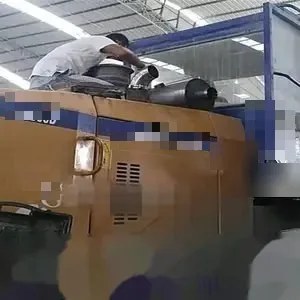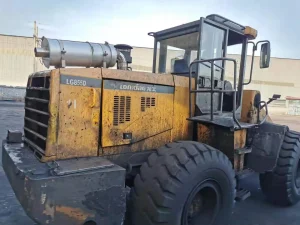
“1,193 China-II non-road mobile machines are proposed for deregistration from our city’s coding registry.” On October 29 the Xinxiang ecology and environment bureau published that notice, open for seven working days. Without objections, the registrations will be cancelled in one batch – and a deregistered machine may no longer be used anywhere in Henan province. The basis is the Henan 2026 diesel truck pollution control implementation plan issued by the provincial environmental commission office.
September 19: a line drawn for eligibility
Zhengzhou’s subsidy scheme, released the same month, cites September 19 again and again: a non-operating truck is defined by whether it held a road transport permit before that date; ownership changed after that date disqualifies the subsidy; a machine qualifies for the renewal subsidy only if it left networked operating traces between January 2025 and September 19. One date locks in which assets still count.
October 29: off the list
The Xinxiang notice is the second batch. The coding registration is a non-road machine’s permission to operate in Henan – machines carry no number plates, so the registration is the identity. Deregistration is not a fine and allows no rectification period; the machine simply leaves the usable list. That weighs more than any ticket.
Early November: the subsidy window opens
Zhengzhou’s phase-out and renewal subsidy scheme for 2026-2027 opens for applications on the Zheng Haoban platform in early November, on a two-year declining schedule: act early, get more; apply next year, get next year’s rate. Three routes qualify – scrapping alone for a one-time payment; scrapping plus buying a pure-electric truck or new-energy machine; and a substantive diesel-to-electric conversion of China-II and China-III machines, with plug-in add-ons or cosmetic part swaps explicitly excluded.
Gone from the list first
Read together, the three steps leave old machines in Henan two roads: scrap, or electrify. The subsidy recognises only diesel-to-electric conversion – adding exhaust aftertreatment is not on the list, because it cannot change a machine’s registration class or buy back a cancelled usage right. The logic matches Baicheng’s ban: the right to operate sits in the registration, not in the tailpipe.
The machines that face daily emissions scrutiny are the ones not on this list. High-emission exclusion zones at construction sites, ports and mines keep expanding, smoke tests are routine, and a China-III or newer machine that fails inspection is stopped all the same. The AIFILTECH non-road exhaust gas purifier and wheel loader purifier serve exactly this in-use segment – the registration class stays, the visible smoke and the maintenance cost do not.
1,193 is one city, one batch. Under the same provincial plan, more lists will follow.