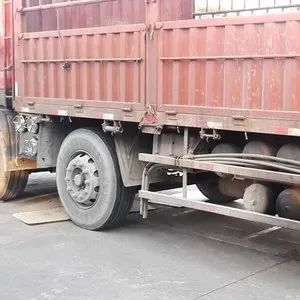
From 1 November, a diesel vehicle in Macao faces a different number at inspection: 40.0 HSU on the loaded-mode test, where the limit used to depend on the year of first registration – 55.0, 50.0, 45.0.
The change comes from Administrative Regulation No. 247/2026, signed on 24 September and published in the Macao SAR Gazette on 5 October. It replaces Tables 1 and 6 of Administrative Regulation No. 30/2016 in one move and repeals last year’s No. 178/2025, which had touched only Table 1.
Why older vehicles lose the most
The old Table 6 graded by first registration: 55.0 HSU before 2000, 50.0 from 2000 to 2005, 45.0 from 2006 onwards. The new table has one row, 40.0, and no year column at all. A truck registered in 2006 or later loses 5 units of headroom, one from 2000 to 2005 loses 10, and anything older than 2000 loses 15 – a 27 percent cut for the oldest group.
The other method is untouched. Free acceleration (Table 5) still sits at 35.0 HSU. Only the loaded-mode side moved.
Smoke alone no longer passes
Nitrogen oxides enter Table 6 for the first time at 1500 ppm, read in the same run as the smoke number. This is not the gram-per-kilowatt-hour basis used for type approval; it is a concentration in the tailpipe, sampled at full load during the lug-down.
Smoke and NOx pull against each other on a diesel. Retard the injection timing, leave a clogged EGR alone, starve the intake, and the smoke falls while combustion temperature climbs and NOx rises. When smoke was the only figure on the sheet, that trade could carry a truck through the test. Two figures on one report leave less room to hide it.
Repair first, retrofit after
The order matters. Poorly atomising injectors, a loaded air filter, a leaking intercooler, carbon in the intake – each one leaves fuel unburned, and fixing them is the cheapest way to bring smoke down. A vehicle that still cannot reach 40.0 has no margin left inside the combustion chamber; a diesel particulate filter is then the standard route, with a dry metal cartridge mounted on the chassis and cleaned by washing, which suits fleets that retrofit ahead of an inspection date.
NOx over the limit is a different problem – EGR, SCR, injection strategy. A DPF will not fix it. Treat the two separately or the money goes to the wrong part.
The year brackets are gone
Dropping the brackets is the part of this gazette notice that is easiest to skim past. The 10 to 15 HSU once reserved for older vehicles bought time; every model year now stands on the same line, and a truck registered before 2000 either gets to 40 or leaves service. In a market this small, where lorries, construction vehicles and cross-border coaches stay on the road for years, retrofit work will not arrive evenly – it will bunch up in the weeks before inspection dates. The AIFILTECH truck exhaust gas purifier, built around a washable dry metal cartridge, fits that rhythm of batch conversion and long-term upkeep; the first question for an operator is still how many years the vehicle has left. For the route from symptom to fix, see our diesel black smoke guide.