China’s Ministry of Ecology and Environment (MEE) issued a draft technical guide on 9 October 2026 covering ultra-low emission assessment, monitoring and maintenance for waste incineration plants. Released for public comment on 13 October and closed on 19 October, it is the first national document of its kind for the sector.
Stack limits: daily averages are tighter than hourly
The draft sets one-hour averages of 10 mg/m³ for particulate matter, 30 for sulphur dioxide and 80 for nitrogen oxides at the incinerator stack, with 24-hour averages of 10, 25 and 60 respectively. Carbon monoxide is limited to 50 / 40 mg/m³, hydrogen chloride to 10 / 8 mg/m³ and ammonia to 8 mg/m³, at 11% reference oxygen. Other dust-generating stacks are held to 10 mg/m³ for both averaging periods.
The gap between hourly and daily NOx limits matters: short bursts of ammonia injection to flatten peaks will not carry a plant through a 24-hour average. Treatment trains have to hold efficiency continuously.
Assessment and operation
Plants may be assessed after one month of stable operation following retrofit. Compliance requires manual monitoring within limits, a valid comparison with the continuous monitoring system, and 30 consecutive days of daily averages plus at least 95% of hourly values within limits while the DCS runs with complete data. The scope also covers fugitive emissions from waste storage and leachate handling, the clean-transport share, and the emission stage of incoming trucks and on-site non-road machinery.
What it means for AIFILTECH customers
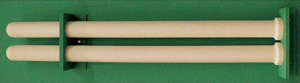
Two-tier NOx limits of 80 mg/m³ hourly and 60 mg/m³ daily shift the test from peak suppression to year-round stability, which makes SNCR alone hard to defend and pushes plants toward SCR or catalytic filter media. Ceramic fibre filter tubes filter directly at 200–900 °C with outlet dust below 5 mg/Nm³, leaving headroom under a 10 mg/m³ limit and removing the cooling and reheating steps that bag filters require. Catalytic tubes combine dust removal and NOx reduction in a single vessel, a good fit for congested existing plants, but tube life depends on the inlet temperature window, alkali and heavy-metal loading, and ammonia control — the 8 mg/m³ ammonia limit constrains injection strategy just as much.
Because assessment follows 30 days of stable operation, filtration area and cleaning cycles should be sized on worst-case load rather than annual averages.
Related products: MULCERAFIL ceramic fibre filter tubes and ceramic filter tube high-temperature dust collectors.
Prepared by AIFILTECH from public sources; the official MEE text governs the limits and their application.