Xinjiang’s Department of Industry and Information Technology and Department of Ecology and Environment, together with the industry and environment bureaus of the Xinjiang Production and Construction Corps, issued the 2026-2027 cement curtailment plan on October 22 (document Xin Gongxin Jiancai (2026) No. 5), publishing it on October 26. Every clinker line across the region and the XPCC must curtail, with carbide-slag plants participating through shutdown swaps. The stated purpose is blunt: ease cement overcapacity and cut air-pollutant emissions.
211 to 255 days, concentrated in the winter heating season
Between November 1, 2026 and October 31, 2027, lines in Urumqi, Changji, Shihezi and Turpan shut for 211 days, including a uniform 181-day winter heating shutdown from November 1 to April 30; Hami shuts 211 days (151 in winter); Tacheng and Altay 211 days (166 in winter); Ili and Bortala 255 days (166 in winter); Bayingolin, Aksu, Kizilsu and Kashgar 226 days (134 in winter); Hotan 215 days (134 in winter). Curtailment days exclude kiln warm-up. Daily and annual output may not exceed 110 percent of registered daily capacity and 100 percent of registered annual capacity.
Differentiated relief: retrofits buy days, but only at A grade
A dedicated section allows relief. Plants with full-year co-processing duties for municipal waste and hazardous waste can skip curtailment, provided they cut production load; others are graded by 2026 co-processing volume above 20,000 tonnes into five bands and gain 3, 6, 9, 12 or 15 extra days. Substituting biomass for fossil fuel above 15 percent earns 6, 9, 12 or 15 days depending on the share. Plants that have completed ultra-low emission retrofits and hold an A-grade performance rating gain 8 extra operating days. Only the highest tier applies; benefits do not stack. Extensions must be approved up the chain, with supporting documents due by March 1, 2027 — late applicants forfeit the right, and plants below A grade generally cannot request extensions during the winter heating season. Persistent non-compliance costs a plant curtailment applications for a year and access to air-pollution prevention funding for three.
What this means for AIFILTECH customers
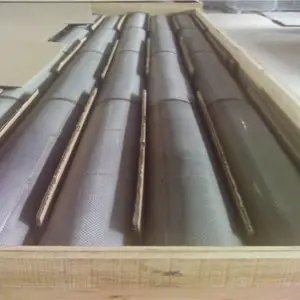
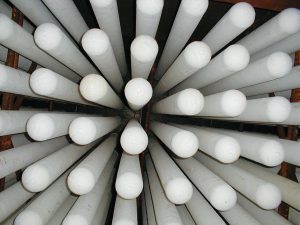
Pricing eight extra operating days into a curtailment plan turns an ultra-low emission retrofit from a pure cost into a measurable capacity return — for lines already limited to a few hundred operating days a year, that is the hardest justification a plant manager can bring to a budget review. What actually tests the equipment, though, is not how long the kiln runs but how it stops: a 134- to 181-day continuous winter shutdown leaves the kiln-tail dust collector sitting in cool, moist, sulphur-bearing gas, and once gas temperature drops below the acid dew point, condensation will blind bags, cake them or hydrolyse them outright. Temperature rating alone is a poor guide; behaviour at low load and low temperature decides the real outage bill. That is why AIFILTECH metal filter bags deserve first consideration on lines with frequent starts and stops — metal media do not hydrolyse, can be washed and reused, and recover far better after long idle periods than conventional chemical-fibre media. During warm-up, unburnt material and moisture hit the bag zone together, so pulse-jet pressure and interval should be set with headroom rather than at the design point. For the high-temperature stage, compare against the MULCERAFIL ceramic fiber filter tube high-temperature gas filter on temperature rating and thermal-shock tolerance before choosing an integrated route. Plants already at A grade should use those eight days as the baseline for whole-life filter cost, not as a reason to chase the lowest purchase price.