Hebei province has launched its autumn–winter air pollution control campaign, aiming to keep annual PM2.5 at or below 37.7 µg/m³ and good-air days at no less than 66.9%, with a focus on key cities, sectors and periods.
Structural cuts: relocation and capacity consolidation
The province will relocate heavy-polluting plants — including the old Xingtai Steel site and Sinosteel Xingtai Machinery — and 11 logistics parks around Baoding’s South Second Ring on a fixed timetable, complete the consolidation of sintered-brick lines, and promote pellet smelting and oxygen-enriched combustion in industrial furnaces to cut emissions before ironmaking.
Key sectors: A-level performance and full-process retrofits
Hebei will consolidate A-level environmental performance in seven sectors including steel, coking and cement, and encourage 12 more sectors — packaging, industrial coating, chemicals and pharmaceuticals among them — to reach A level, with at least nine new A-level enterprises by year-end. Full-process ultra-low emission retrofits and deNOx upgrades will be accelerated.
Transport and mobile machinery
By year-end, clean transport is to exceed 90% in steel, coking, cement, power and coal (excluding Chengde and Zhangjiakou), and reach at least 50% for bulk cargo in logistics parks. At least 30% of China IV and older medium- and heavy-duty trucks and Stage II and older non-road machinery are to be retired.
Implications for filtration
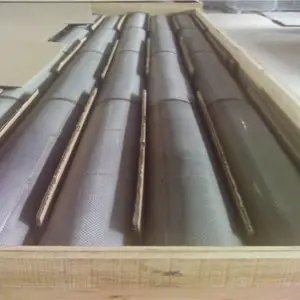
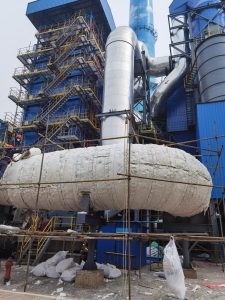
After retrofit, stable compliance in sintering, coking and cement kilns depends on media life and cleaning-system matching. Ceramic fibre filter tubes suit high-temperature gas with outlet dust below 5 mg/Nm³; metal filter bags are water-washable and tolerate corrosive constituents. Retrofits should re-check filtration area, pulse pressure, tube sheet and insulation rather than replacing media alone.
Related products: ceramic fibre filter tubes, metal filter bags and cartridges, and dust collector insulation works.