A usage log kept for two years. GPS coordinates on every machine. Fuel delivered under signed agreements. On November 3, the Guangzhou Ecology and Environment Bureau issued the city’s trial measures for non-road machinery emission oversight, shifting regulation from one-off inspections to a continuous record.
The fifteen articles cover nearly every diesel workhorse in and around job sites: construction machinery, in-plant vehicles, port handling equipment, forestry and fishery machinery, airport ground support — excavators, dozers, loaders, forklifts and concrete mixers among them.
What gets recorded
The paper trail starts with registration: every machine needs an environmental code. GPS installation connected to the city’s oversight platform is encouraged, with new-energy machines exempt. On construction sites, entry and exit must be reported, and usage logs have to capture where the machine worked, how long, when it entered and left, its GPS installation status, and every fuel purchase — retained for at least two years.
Fuel gets its own chapter: the measures promote a direct-supply model, where project owners and contractors sign written agreements with inspection-compliant fuel stations for delivery straight to the site. That narrows the space for off-spec diesel that has long been a quiet cause of excessive smoke.
Who answers for it
Responsibility is written into contracts. Owners, contractors and supervising firms must spell out machinery environmental clauses in construction agreements, while machine owners carry day-to-day responsibility for maintenance, compliance and equipment condition. The ecology bureau leads supervision and testing, with housing, transport, water and port authorities covering their own sectors under a joint inspection mechanism.
What it means for aging fleets
Put the four pieces together — registration, GPS, site reporting, two-year logs — and a machine’s emission status stops being an annual snapshot. It becomes a continuous record that can be pulled up at any time, leaving little room for visible smoke or tampering to go unnoticed.
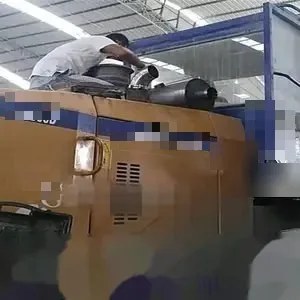
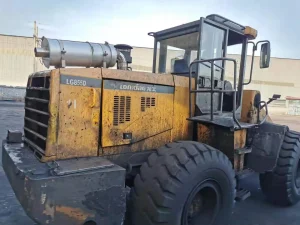
For equipment owners, the practical options are narrowing but clear: phase out an aging excavator, loader or forklift as a high-emission machine, or keep it compliant every single day. An aftermarket exhaust purifier for non-road machinery or a wheel-loader smoke purifier improves visible smoke opacity and day-to-day test results — it does not change a machine’s registration class, but with logs now spanning two years, staying within limits has become a daily obligation rather than a yearly one.