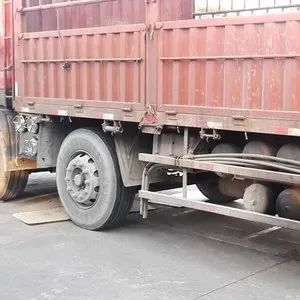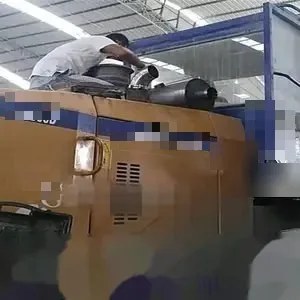
As of November 1, environmental inspectors are working in all 50 districts of Bangkok, on a unified checklist covering five categories of pollution sources – diesel cars, site vehicles, buses, trucks and passenger vessels come under Category E, every day of the year.
A week later came the carrot. On November 6, Thailand’s Minister of Natural Resources and Environment Suchart Chomklin, together with the Bangkok Metropolitan Administration and the Federation of Thai Industries, launched the “Fight Dust, Reduce PM2.5 Together” campaign: from November 1 to March 31, 2027, service centers of nine brands – Toyota, Isuzu, Hino and more – plus fuel companies such as PTT and Shell and independent chains like B-Quik offer up to 50% off servicing, parts and engine oil.
A calendar that runs to March
None of this appeared overnight. On October 17, a central strike team drawn from the environment, health, city police and public works departments began trial runs. On October 20, a deputy governor chaired the kickoff meeting that folded every agency into one inspection manual, with results logged in a digital system. On October 22, the Green List opened for registration, letting compliant four-wheel-and-above freight trucks sign up for access during low-emission-zone periods. On November 1, inspectors went live in all 50 districts as the discount window opened; on November 6, the minister-level launch closed the sequence. Bangkok has also split the city into four risk zones: 11 districts for burning and wasteland, 16 for traffic and construction, 10 for factories and warehouses, 13 for mixed sources.
From 28 days to 20
Governor Chadchart Sittipunt’s target for 2027: keep days with PM2.5 above 37.5 micrograms per cubic meter down from about 28 last year to no more than 20. He splits the city’s dust into three sources – stagnant weather, vehicle exhaust at roughly one third, and agricultural burning inside and outside the country. Five measures back the target: Super Stations tracing dust in real time, a Green List widened to registered four-wheel transport vehicles, smoke monitoring added to more than 200 factory boilers, burn control coordinated with neighboring provinces, and satellite hotspot and wind data shared with ASEAN neighbors. The forecast is unhelpful – El Nino and the Indian Ocean Dipole point to a drier season that lets dust accumulate. The trend, though, runs the right way: red-level days have fallen from more than 90 three years ago to about 30 today.
Discounts first, tickets later
The half-price servicing is not generosity; it is an off-ramp built before enforcement season. A few hundred baht spent on maintenance is the cheapest way to pass the opacity test and keep running through low-emission-zone checks, while a truck stopped for a day costs a fleet its whole load. For older vehicles that cannot pass even after a full service, the remaining road is retrofitting: the truck exhaust gas purifier from AIFILTECH is built for exactly these inspection-failing trucks, and the non-road exhaust gas purifier covers the excavators and loaders at construction sites that face the same checks. The discount handles the gentle half; inspectors and the low-emission zone handle the rest – and Bangkok has put both on the same calendar.