
Case Studies / Genset & Power
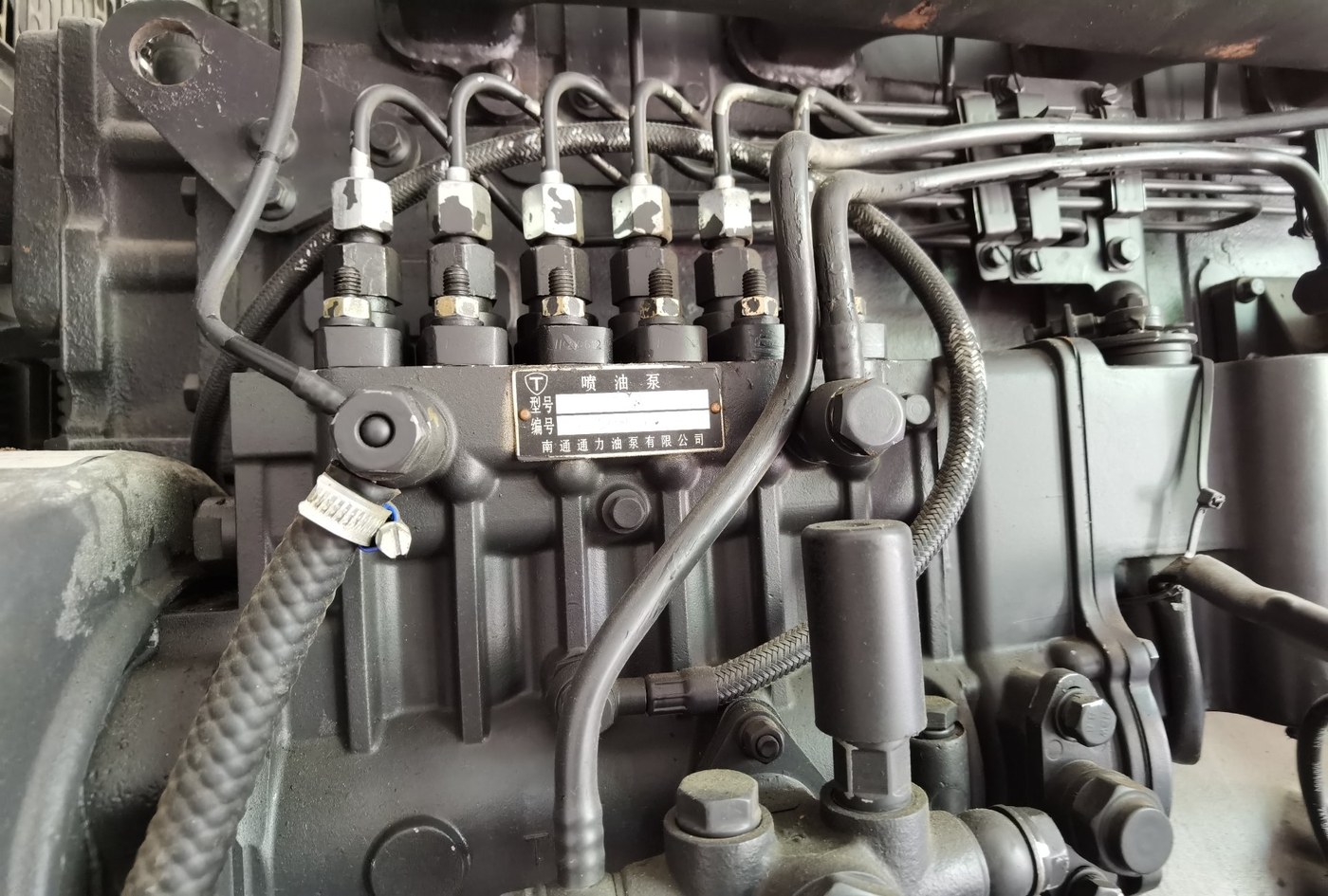
Generator SCR Retrofit at a Guangdong Cement Plant
BOSCH urea dosing and SCR for a 300 kW standby genset
1. Project overview
| Location | A cement plant in Guangdong, China (client name withheld) |
|---|---|
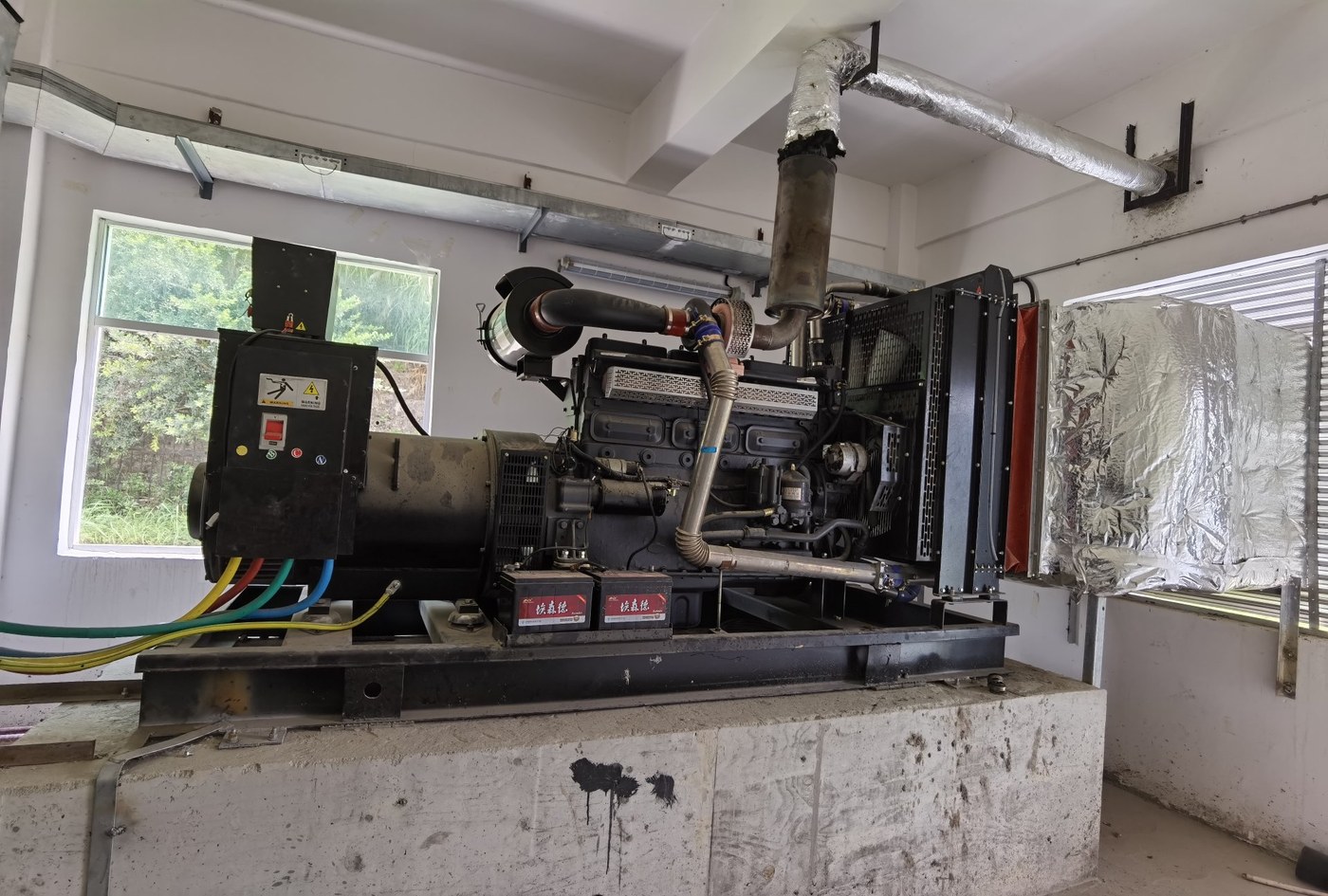
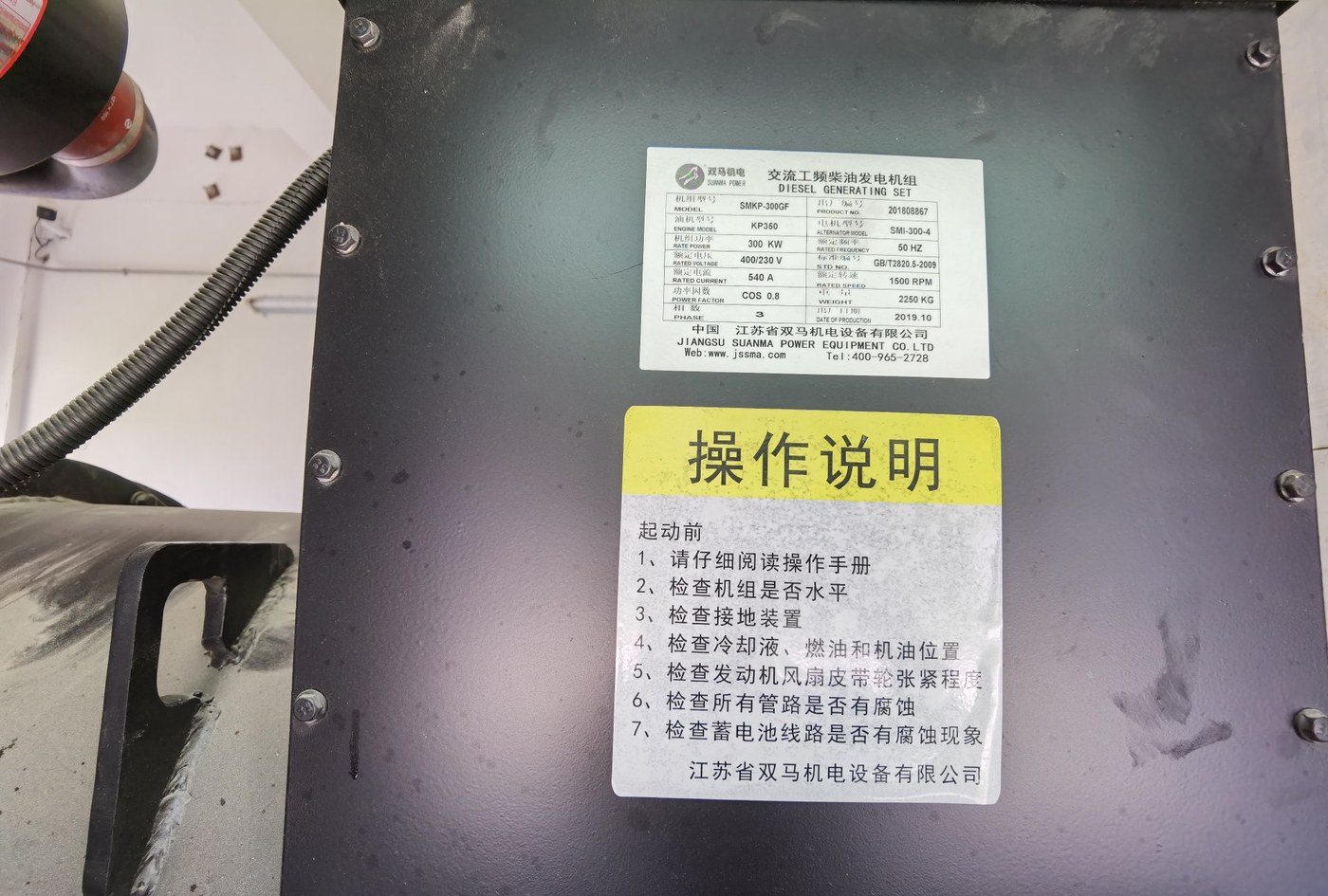
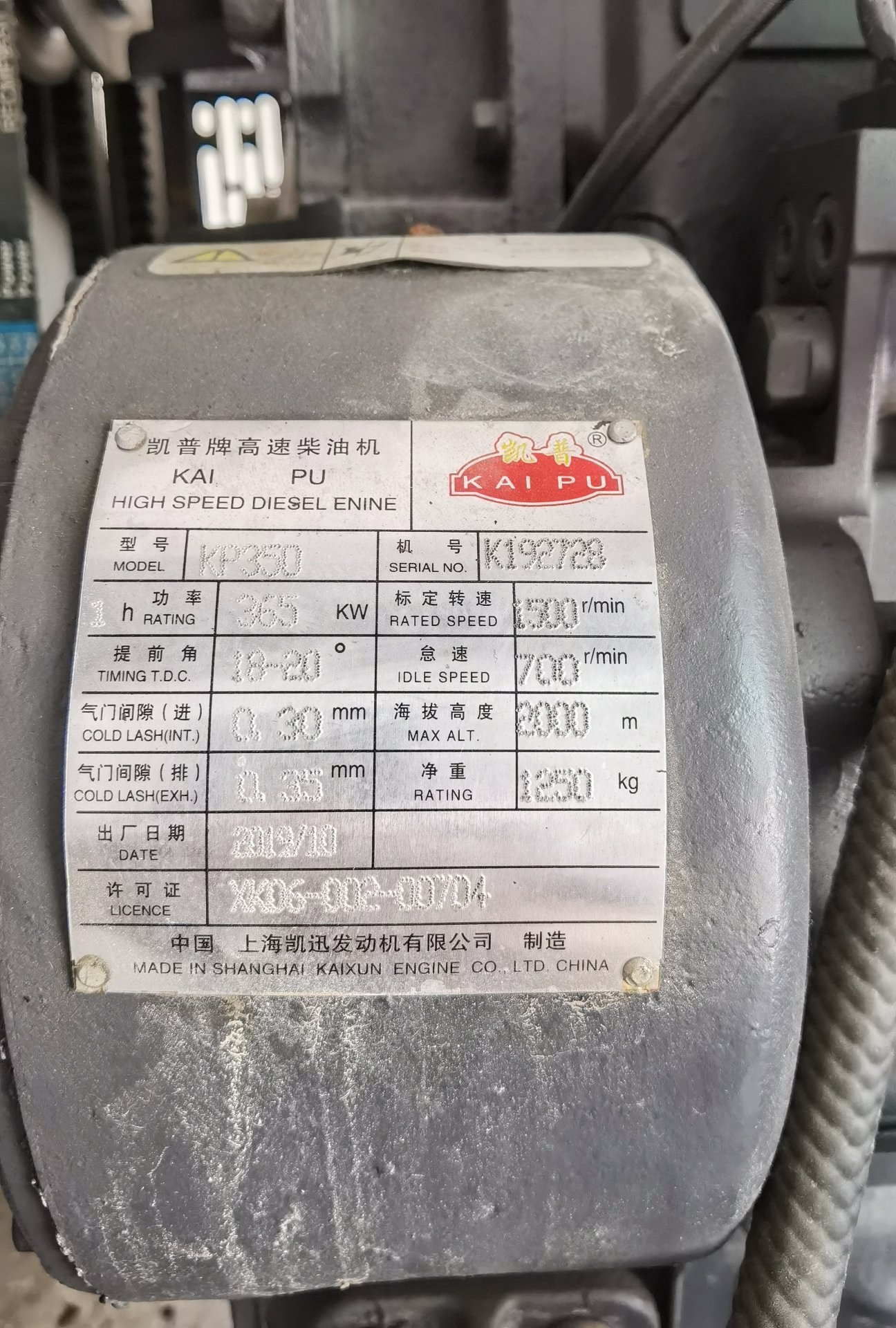
| Genset | Jiangsu Shuangma SMKP-300GF diesel generating set |
| Rated power / voltage / current | 300 kW / 400·230 V / 540 A |
| Frequency / speed / power factor | 50 Hz / 1500 rpm / 0.8 |
| Engine / alternator | KAIPU KP350 (1-hour rating 365 kW) / SMI-300-4 |
| Genset weight | 2250 kg |
| Condition before retrofit | Years in service with no exhaust after-treatment; visible smoke at start-up and under load; no NOx control |
2. The hard part is not the reactor
- No NOx control at all. An early non-road configuration without EGR or after-treatment, so raw NOx is high.
- Low load factor, low exhaust temperature. The set is idle most of the year and only loads during tests and outages. Low temperature narrows the catalyst window and raises the risk of urea crystallisation.
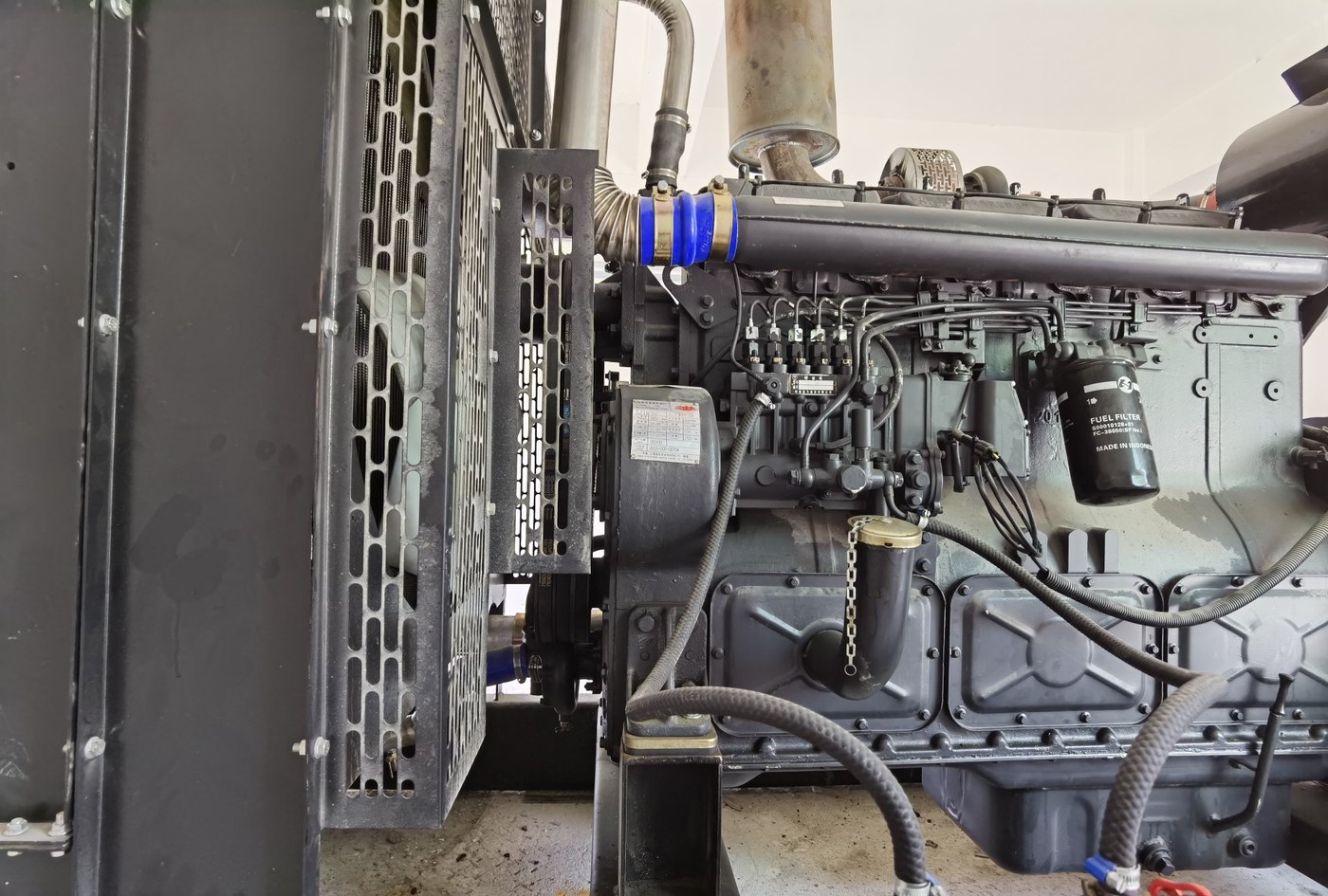
- A tight power room. The reactor has to be sized to the existing room and piping route.
- Reliability is the red line. Nothing may compromise emergency start-up or load pickup, and installation can only happen in downtime windows.
The industry context matters too: ultra-low emission retrofits continue across Chinese cement plants, and supervision of on-site diesel machinery and standby power is tightening. A small standby set still shapes how the whole plant looks in an inspection.
3. The solution: urea-injection SCR
With SCR the reactor is rarely the problem; metering and mixing the urea is. Injection pulse width is calibrated against exhaust temperature and flow, a mixing section evens out the atomisation, and the nozzle position follows the casing layout to limit wall films. The reactor is sized by space velocity, the catalyst is selected for the operating temperature band, and insulation is added for low-load duty.
| Injection system | BOSCH (Germany), sized for the 300 kW set |
|---|---|
| NOx sensor | Continental (Germany), real-time feedback for closed-loop correction |
| SCR reactor | Dinies coating (Germany), 345 mm dia. × 1100 mm (adjusted to site) |
| Urea tank assembly | 1 set |
| Temperature / pressure sensors | PT100 exhaust temperature, intake temperature and pressure, ambient (optional per site) |
| Wiring harness | Customised to the power room |
| Control cabinet (power converter) | Purchased by the customer; AIFILTECH supplies wiring definitions and commissioning support |
Control logic: the PT100 exhaust sensor and the intake temperature/pressure sensor feed the controller. Once exhaust temperature enters the catalyst window, urea is dosed against the NOx target; when temperature is too low, dosing stops, which rules out ammonia slip and crystallisation at the source. The NOx sensor closes the loop on dosing quantity.
4. The set and the site survey
5. How it was delivered
- Site survey: outlet diameter, exhaust temperature profile, available space and piping route.
- Custom design: reactor dimensions and nozzle position fixed to site conditions; harness made to the room layout.
- Installation in downtime windows: no change to the engine or the emergency start-up logic, clamp-type pipe connection.
- Commissioning: pulse width calibrated against temperature and the NOx target, closed loop engaged.
- Handover: third-party testing can be arranged to confirm results.
6. Configuration and expected results
- NOx reduction. The system is rated at up to 90% under standard conditions; actual results vary with exhaust temperature, load factor and fuel quality, and third-party testing confirms the outcome.
- Core components. BOSCH dosing, a Continental NOx sensor and a Dinies-coated reactor, all with established spare-parts channels.
- Power reliability. The engine and emergency start-up logic are untouched; installation happens inside downtime windows.
- Extensible. A DOC, metal DPF and ASC can be added downstream for combined smoke and CO control.
7. Where it applies
The scheme fits diesel gensets used as standby power where NOx and smoke have to be controlled: cement and building-materials plants, mines, ceramics and glass, data centres, hospitals, airports and ports. AIFILTECH provides sizing, custom design, installation and commissioning.
8. FAQ
A standby unit rarely runs — is SCR really necessary?
Yes. Emissions during test runs and emergency operation are regulated too, and a standby set called into action usually runs at full load, releasing smoke and NOx in a burst. Insulation and temperature-gated dosing keep the SCR effective at low load.
Is the reactor size fixed?
No. 345 mm diameter by 1100 mm length is the baseline; the reactor is adjusted to the actual duct diameter, room space and exhaust temperature profile. Nozzle position and the wiring harness are customised on site.
How is urea crystallisation prevented?
Three measures: pulse width calibrated against temperature and flow with dosing suspended when temperature is low; a mixing section for even atomisation; nozzle position tailored to the casing to avoid wall films.
Will the retrofit affect power generation?
No. The engine and emergency start-up logic are untouched, and the reactor is designed for low backpressure. Work is completed inside downtime windows.
9. Related products and cases
- Urea-injection SCR exhaust purifier — the system used here.
- DOC + SCR + DPF + ASC purifier — when smoke and CO need treating as well.
- Genset emission control — sizing by power and duty.
- Jiangmen 1800 kVA retrofit — smoke and CO treated together.
A similar genset to treat? Send us the model, rated power, exhaust outlet diameter and available room space. We will run a sizing check first, then decide whether a site survey is needed.
Bruce Wen · +86 188 1936 6808 (mobile / WhatsApp / WeChat) · bruce.wen@aifiltech.com