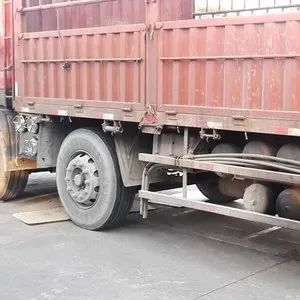
How many cars does one heavy truck equal? Hao Jiming, in an interview with China Environmental News, offered the exchange rate: 60 cars for CO2, 750 for PM2.5, 820 for nitrogen oxides. Scale that up and 2,000 trucks emit as much NOx as a 600 MW coal plant.
Hebei has turned that equivalence into a ledger. Mobile sources account for more than 60% of the province’s NOx, and heavy diesel trucks for 80% of vehicle NOx. By November 8 the province had more than 68,000 electric heavy trucks on the road, cutting about 40,000 tonnes of NOx a year – roughly 0.6 tonnes per vehicle.
The 90% Line Lands on the Fleet
The deadline is close. By the end of 2026, six industries – steel, coking, cement, thermal power, coal and non-ferrous metals – must reach 90% clean transport in every city except Chengde and Zhangjiakou, with bulk cargo at logistics parks above 50%. By the end of 2027 the key regions target 100%. Ports carry their own figures: 90% clean transport for coal leaving the main ports of Tangshan, Qinhuangdao and Cangzhou, 90% for coke and iron ore, 30% for containers.
Ninety percent is a share of tonne-kilometres, not of trucks. Accounting follows transport mode: “rail plus electric drayage” counts as clean, so the leg from plant to railhead, run by electric trucks, pulls the whole chain into the numerator. For a mill without a rail siding, the last few kilometres at the gate decide the score.
Hebei names its own gap: short-haul clean transport in steel has moved quickly, medium and long haul still runs on diesel. Those kilometres will not electrify soon – range, charging and empty return legs do not close the arithmetic – so their emissions have to be held by aftertreatment. Inspection, access rules, urea and element changes are the recurring cost for that fleet, and the place where truck exhaust purifiers actually sit.
Xingtai shows 90% is not a ceiling. The city lifted its clean transport share from 68.7% in 2024 to 97.5%, and nitrogen dioxide averaged 15.7 micrograms per cubic metre in the first nine months of 2026, down 27.98% year on year. The cities that moved fastest swapped fleets and gate systems together, not fines.
The ledger counts kilometres, not vehicles.
The build-out is following the same logic. Hebei is fitting 26 battery-swap stations for heavy trucks across 13 pairs of motorway service areas, with megawatt chargers, on corridors linking Beijing, Shanghai and the Huanghua port hinterland. Charging decides how much of the 90% a fleet can actually claim; the rest of its mileage keeps burning diesel.