461 yuan per tonne of steel to build; 196 yuan per tonne each year to run. With those two numbers, the China Iron and Steel Association’s third-quarter press briefing on October 30 turned ultra-low emission policy into accounting.
By the end of September, 307 steel enterprises had completed part or all of their ultra-low emission retrofits and assessment monitoring; 282 had finished the whole process, covering about 940 million tonnes of crude steel capacity. Emissions moved in step: in the first three quarters, sulphur dioxide, particulate matter and nitrogen oxides in the waste gas of key statistical enterprises fell 4.9%, 0.3% and 5.2% year on year.
The ticket is 461; the subscription is 196
461 yuan is capital expenditure – spent once. 196 yuan is operating cost, and across 940 million tonnes of capacity it adds up to spending on the order of 18 billion yuan every year. What is the industry’s profit margin right now? 1.57% – total profit of key enterprises fell 27.4% to 71.8 billion yuan, and 29.6% of them lost money. At that margin, whether a dust collector runs all year and how much attention it needs decides whether the ledger holds.
Particulates fell only 0.3%, against 4.9% and 5.2% for the two gases. The base is already low, and every further fraction demanded from the filtration system weighs more. The concentration number from acceptance day is a single operating point; the real cost hides in year-round running – filter media replaced too often, pressure drop creeping up, extra downtime for cleaning. Past that, 196 yuan stops covering it. Energy efficiency has its own payback arithmetic – 70 benchmark mills spent 81 yuan per tonne and recovered it in 3.6 years – but emission equipment earns no such rebate; it only has to work, all year, at every load.
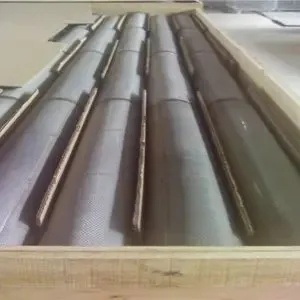
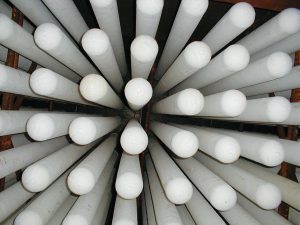
At high-temperature, high-dust points such as blast-furnace gas and sintering machine heads, the washable regeneration of AIFILTECH metal filter bags and the heat tolerance of ceramic fiber filter tubes work on exactly this end of the ledger – every extra overhaul cycle that a filter media survives is money kept in the annual fee.
Publishing the two numbers side by side sets a benchmark for the industry: the race is no longer over who installed the equipment, but over who can afford to keep it running. The 282 mills already through the whole process will be joined by the rest in that annual accounting – and next year’s briefing will show whether 196 yuan still buys a compliant kiln.