
Genset Emissions: Why Low Load Kills a Retrofit Filter
A standby generator is the easiest machine to mistreat with an exhaust retrofit, because its duty cycle is nothing like a vehicle’s. It starts cold, runs wherever the load bank decides, spends most of its life at low load, and is expected to deliver rated output minutes later. Filter designs that assume road-duty exhaust temperatures fail in exactly that pattern — which is why the six questions below decide the outcome long before any hardware is quoted.
Does a standby set that runs 50 hours a year need treatment at all?
That depends on who audits it, not on how long it runs. Backup power for data centres, hospitals and telecom sites is increasingly written into environmental acceptance and facility clauses; some cities also test the start-up puff — and the coldest, blackest smoke of the year happens in that first minute. For a 50-hour set, the problem is not total mass. It is those minutes, every start.
Will it cost me kVA?
Only if the system restriction is pushed past the engine maker’s back-pressure allowance. Total restriction — pipework plus filter at rated flow — above that allowance shows up immediately as lost output and higher fuel burn, which is where “the set no longer takes full load” complaints come from. Get the allowance in writing from the engine supplier before design, measure after installation, and put both numbers in the acceptance file.
Why does low load block a filter faster than hard work?
Passive regeneration needs exhaust temperature. On road duty, temperatures are high enough for deposited soot to oxidise continuously. A standby set runs briefly, then sits cold. Soot goes in and never leaves, and the element loads at a rate that looks like a defective filter — when in fact the duty never fed the regeneration in the first place.
Washable metal element or active regeneration — how to choose?
| Dimension | Washable metal element | Active regeneration |
|---|---|---|
| Depends on exhaust heat | No — unaffected by low-load duty | Needs burner or electric heat; system complexity rises |
| Maintenance | Element out, wash, refit | Replace or professionally clean on ash load |
| Downtime window | Hours; can share a service window | Regeneration consumes run time |
| Best fit | Standby and low-load sets; high-sulphur fuel regions | Continuously loaded prime-power sets |
A simple reading: the lazier the set, the more a washable element makes sense; the harder a set works, the more active regeneration pays for itself. Standby duty almost always lands in the first column.
Is one filter body enough?
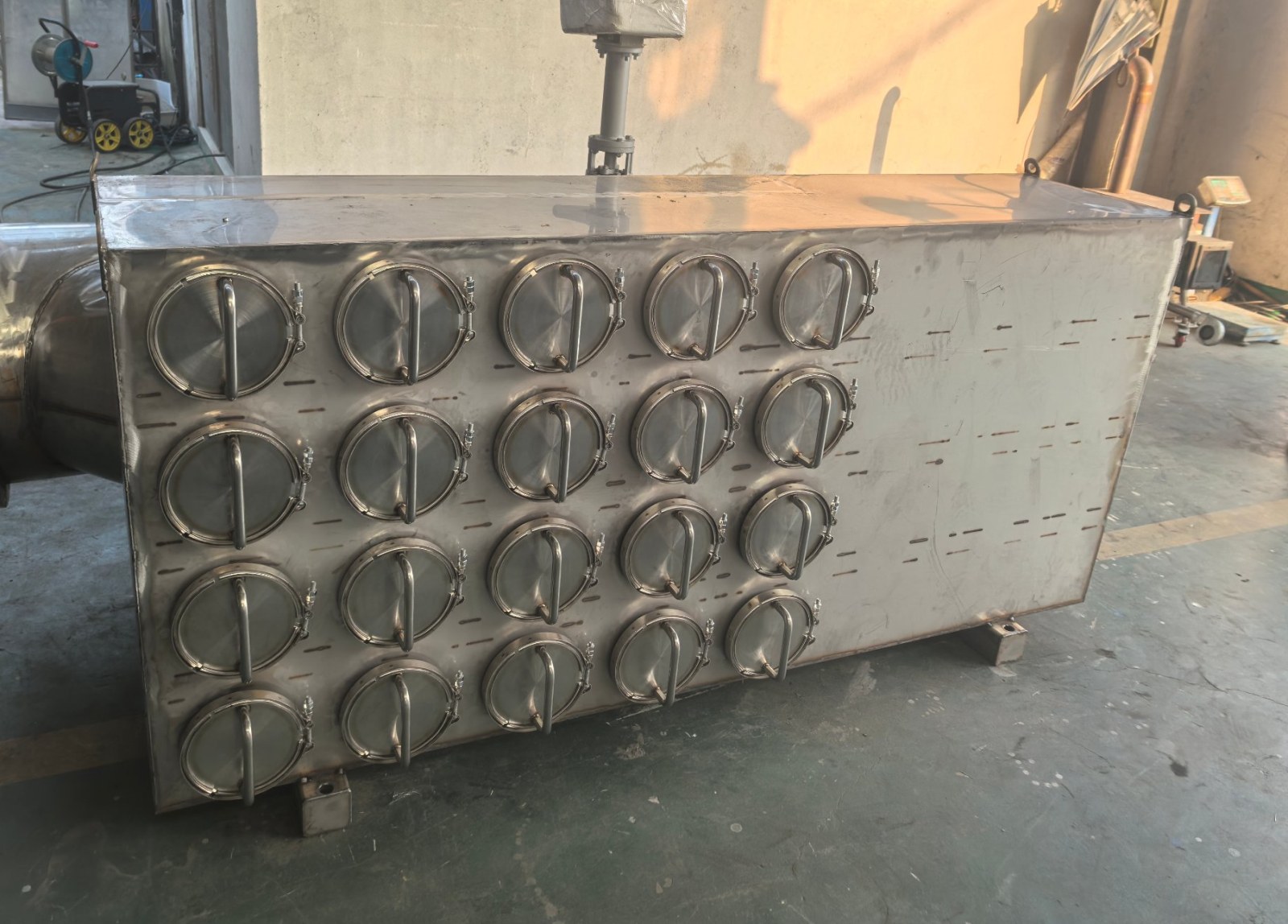
No — and this is where a genset retrofit differs most from a vehicle one. Genset exhaust runs are usually designed from scratch: bellows to absorb engine vibration, a valve group that keeps the set available while an element is out, insulation to hold exhaust temperature, hoisting brackets that carry the weight to the foundation. Miss any one of these and the filter body never delivers its rated performance. We deliver genset projects as systems; the filter is only the visible part.
What data proves the set is compliant?
Three documents. First, the test report: our metal purifier sampled by a CMA/CNAS-accredited laboratory in Foshan against GB 36886-2018 Table 1 Category III measured 0.34 m⁻¹ against the 0.50 m⁻¹ limit — certificate on our credentials page. Second, the measured back-pressure at rated flow after installation, against the engine maker’s allowance. Third, a load-bank record showing the set still takes full load after the retrofit. Together those three pages are the compliance evidence.
Further reading
- Construction and Mining Equipment: Repair First, or Fit a Filter?
- Forklifts and Port Tractors: Two Duty Cycles, Two Designs
- Electrolyzer Materials: Titanium Felt, Nickel Felt or Porous Titanium Plate
Frequently asked questions
Can installation wait for a scheduled outage?
It can, and it should. All pipework is prefabricated against the outage window; site work is limited to final connection.
How often does standby duty need a wash?
On back-pressure trend, not on the calendar. Most standby sets need it once a year or less; telecom sets that start daily run denser. Per-core access covers let cleaning proceed core by core without taking the whole unit out of service.
Does a load-bank test change anything for the filter?
Nothing negative. Full-load running is the element’s favourite condition — high temperature, good soot blow-through. The back-pressure reading after a load-bank test is exactly the number that shows how the element behaves at high flow and temperature.
Related products
- 20-core large dry genset black smoke purifier — per-core maintenance for high-rating sets
- 12-core purifier with bypass butterfly valve — the set stays available while elements are out
- 4-core hoisting genset purifier — suspended layout for cramped plant rooms
- Genset exhaust bellows piping — vibration isolation, designed with the run
Next step
AIFILTECH supplies complete genset emission systems: purifier bodies, bellows runs, valve groups and insulation. Send the set rating, its duty and your local requirement, and we will return a technical proposal first. WhatsApp: +86 188 1936 6808 or bruce.wen@aifiltech.com.
Test reference: report K20-WT50002 from the Foshan Quality and Metrology Supervision Testing Centre, per GB 36886-2018 Table 1 Category III. Back-pressure allowances per each engine maker’s documentation.