“Any machine that exceeds emission limits or emits visible black smoke shall be repaired promptly, or fitted with or replaced by a compliant pollution control device.” That sentence, Article 8 of Guangzhou’s new trial measures on exhaust pollution from non-road mobile machinery, is the one equipment owners will remember. Issued as Document Sui Huan Gui Zi [2026] No. 8 on November 2 and published on November 3, the measures take effect on November 9 and run for three years – fifteen articles in all.
Fifteen articles, three practical questions.
Which machines have to register?
Excavators, bulldozers, loaders, forklifts, port handling machines, airport ground-support equipment – anything with a combustion engine on the list falls in scope. Before a machine enters service, its owner must complete environmental code registration through the city’s non-road machinery supervision system; machines registered elsewhere must file their existing code. Changes of ownership, worksite or scrappage call for updating or deregistering. The measures also draw the high-emitter line, and any one of three conditions is enough: an engine designed below China-III, visible black smoke in use, or exhaust opacity above the Class III limit in GB 36886-2018.
What about trackers and logbooks?
GPS units are encouraged and should connect to the city system; new-energy machines are exempt. Tampering with, dismantling or faking a tracker is punishable under the Ecology and Environment Code. Usage logbooks must record the worksite, operating hours, entry and exit times, tracker status and fuel purchases, and be kept for at least two years – the measures themselves run for three, so the paperwork follows a machine nearly the whole way. Fuel must meet national standards, and contractors may sign direct-delivery agreements with licensed fuel retailers. For the regulator, the document lists e-tags, remote emissions monitoring and geofencing.
What happens to a smoking machine?
Article 8 is the answer: repair it promptly, or fit or replace a compliant pollution control device. Article 7 encourages construction contracts to specify registered machines meeting China-III or better, and Article 12 lets anyone report unregistered, unlogged, tracker-tampered or high-emitting machines. A smoking excavator will find it harder and harder to run quietly in Guangzhou.
Article 8 goes after the exhaust itself
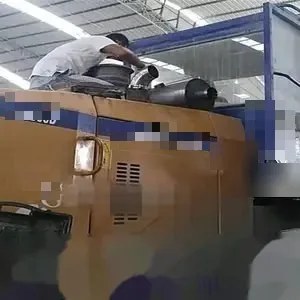
Older low-emission zones answered whether a machine could enter a site; these measures ask whether the machine is clean, and they name retrofitting pollution control devices as a legitimate fix – a formal channel for exhaust aftertreatment retrofits. With trackers online and two years of traceable logbooks, a smoking machine is no longer a gamble but a matter of time before it is reported. For worksites and ports, a retrofit is a one-off cost; repeated downtime, fines and lost site access are the recurring ones. The non-road exhaust gas purifier and the wheel loader purifier from AIFILTECH are fitted machine by machine for exactly this in-use transition. Guangzhou moves first on November 9; the rest of the Pearl River Delta is unlikely to stay behind for long.