Fifteen companies, one opinion. A new briefing from the Getting to Zero Coalition, convened by the Global Maritime Forum, reports that all fifteen firms consulted – mainly shipowners from the container, dry bulk and tanker sectors, joined by charterers, fuel producers and infrastructure companies – want non-compliance penalties under the IMO Net-Zero Framework to stay meaningful and comparatively simple. The timing is deliberate: the Intersessional Working Group meets November 23-27, MEPC 85 runs November 30 to December 3, and the resumed adoption vote is set for December 4 – three weeks away.
Can a penalty turn into an investment?
The dispute is not about the size of the penalty but whether the money can circle back. Three mechanisms are on the table. Remedial units send payments into a centrally managed IMO fund. Direct contributions let shipowners fund projects they select, subject to approval and oversight. Voluntary units treat part of the payment as an investment the shipowner may recover, returns included. RU is the original design approved at MEPC 83; DC and VU are newer alternatives meant to defuse political objections. GMF’s conclusion is blunt: a penalty that can partly be clawed back is a weaker penalty.
Why shipowners want simple
The answer sits in pricing cycles. Fuel and freight decisions are made on horizons of three months to one year, while returns from voluntary-unit investments arrive later and in uncertain amounts – money that cannot enter the fuel-cost ledger, and therefore never reaches freight rates. Compliance costs must stay visible and predictable to be passed through to customers. Company-directed spending also multiplies oversight: regulators would have to review project selection, returns and environmental outcomes firm by firm, an administrative burden that could exceed supervising one central fund. Fuel producers add a further caution: what they need is reliable offtake commitments, and fragmenting revenue across companies erodes the scale that makes zero-emission fuels competitive.
What is still open before December 4
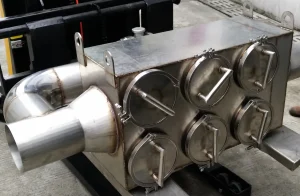
Adoption requires a two-thirds majority of MARPOL parties present and voting; the April vote drew 63 in favor before the outcome was postponed by a year. This time the United States has threatened sanctions, Saudi Arabia and Russia oppose the text, and Greece and Cyprus abstained – the count will be tighter. Whatever mechanism survives, the direction of engine emission constraints is unchanged; only the bookkeeping of compliance cost is in play. Predictable, ledger-ready costs are what justify retrofit decisions – the logic behind AIFILTECH’s metal exhaust gas purifiers for marine auxiliary engines and dry genset black smoke purifiers: measure first, install once, cost known.