“We have also been lucky this winter. There is no severe category pollution till now because of the winds.” That was India’s Supreme Court on Monday, assessing Delhi’s air – and crediting meteorology, not enforcement. The next day, the numbers arrived.
The gap between 2.54 million and 185,000
In an affidavit filed in the suo motu air pollution case, the Commission for Air Quality Management (CAQM) said more than 2.36 million end-of-life vehicles are still plying roads across Delhi-NCR. Of the 2.54 million overage vehicles reported across Delhi, Haryana, Uttar Pradesh and Rajasthan, only 185,000 had actually been scrapped or issued no-objection certificates, as reported by The Hindu. That is a retirement rate of roughly one in fourteen.
What the fleet is actually made of
The same affidavit breaks down the registered population: two-wheelers make up 65.2% of vehicles in Delhi-NCR, four-wheeler light motor vehicles another 28.9%. The commission’s submission is blunt – older vehicles emit considerably more than BS-VI equivalents. Since 1 November 2026, only CNG, electric or BS-VI diesel inter-city buses may enter Delhi, and commercial goods vehicles are barred unless they are BS-VI, CNG, LNG or electric.
An entry ban is a mirror
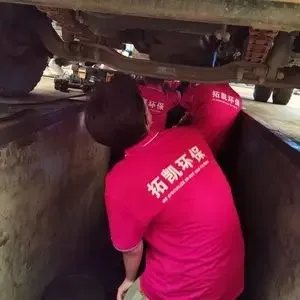
A border ban does not clean an engine; it relocates it. Trucks turned away at Singhu or Badarpur keep running elsewhere on older engines – which is why the scrappage gap, 2.54 million overage vehicles against 185,000 retired, matters more than any single city’s restriction. For fleet operators, the fork is replacement or aftertreatment: a truck exhaust gas purifier or a metal DPF retrofit can bring an older diesel back inside the opacity and PM limits that entry checks now enforce. Which fleets move first will be decided by retrofit economics, not by the affidavit.