Under 1 billion liters – that was global marine biodiesel consumption in 2025. Over 12 billion liters – where the IEA says it could land in 2031. Both numbers come from the same report, “Renewables 2026”: under current policy, demand reaches nearly 2 billion liters by 2031; if the IMO Net-Zero Framework passes, the same year exceeds 12 billion. The 10 billion liters in between are riding on one vote on December 4.
The timetable is fixed: November 23-27, the final round of the intersessional working group (ISWG-GHG 23); November 30 – December 3, MEPC 85; December 4, the resumed extraordinary session takes the framework up again. The proposals on the table pull in opposite directions – Australia, Canada, South Africa and the UK would keep the framework and shift dates by a year; Brazil would soften the early steps; Tuvalu would drop the 2028 step and require full compliance from 2029 to 2035; Norway would convert rewards into tradable surplus units valid for five years. Adoption needs a two-thirds majority, a far higher bar than the simple majority that adjourned the vote 57-49 in 2025.
Rules that do not wait for the IMO are already collecting. EU ETS covers shipping at 100 percent from 2026 and FuelEU Maritime is in force, so ships calling at European ports face those costs regardless of the vote. The IEA adds that Europe accounts for roughly 80 percent of marine biodiesel demand growth to 2031 in its main scenario, driven by FuelEU Maritime; Asia-Pacific’s bunkering share depends on the IMO outcome.
12 billion liters waiting on one vote
The sixfold gap is itself a price – the price of policy uncertainty. Alternative-fuel ship orders have fallen back since 2025 as owners decline to bet capital on any one route before the framework lands. The settled parts of the rulebook, meanwhile, are already raising operating costs. Old ships will keep sailing: newbuildings are expensive and slots are scarce, so compliance pressure stretches the service life of the existing fleet, and engine condition and exhaust treatment turn from compliance items into cost savers.
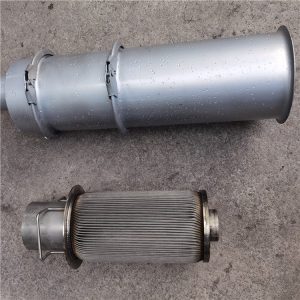
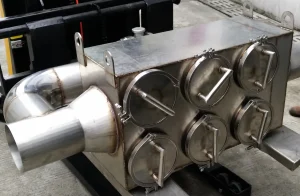
China’s proposal would credit wind, shore power and solar toward rewards – if adopted, every efficiency retrofit on board gains value. Whatever the final GFI text says, visual black-smoke checks at ports and along coasts will only tighten: AIFILTECH’s metal exhaust gas purifiers treat black smoke and particulates from marine and genset engines, and its dry genset black smoke purifiers run without water, fitting the retrofit budgets of port operations and inland vessels.