Three things shared the stage in last week’s emission-control news: the register, the tax rate and the right to drive. Read together, they show the lead role has changed – no longer new plants, but machines that have already been running for years. None of last week’s announcements raised tailpipe limits; all of them priced the fleet that already exists on the road.
The register moves first
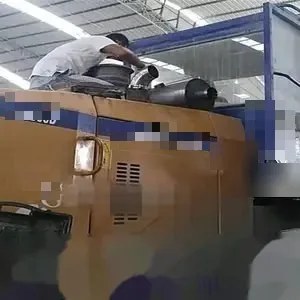
Non-road machinery control has completed a three-step arc. Xinxiang, Henan published a plan on October 29 to deregister 1,193 China-II machines – once struck off, they may no longer be used anywhere in the province – turning registration from identity into eligibility. Zhengzhou added stepped purchase subsidies for 2026-2027, paying early movers before the bans bite. Guangzhou’s measures for non-road mobile machinery take effect on November 9, hard-coding registration, real-time tracker networking and two-year logkeeping, with visible black smoke enough to fail a machine on its own. Dezhou set the endgame: from December 1, China-I and below machines are banned across the whole city along with China-III-and-below yard vehicles, and China-II and below follow everywhere from July 1, 2027. Register, restrict, clear – the decision window left for owners is shorter than any previous round.
Grading starts paying
On the industrial side, incentives put a price tag on the table for the first time in this form. The steel association’s Q3 ledger showed 282 mills have completed full ultra-low-emission retrofits across 940 million tonnes of crude-steel capacity, at 461 yuan per tonne of investment and 196 yuan per tonne of annual operating cost – and sector profits still fell 27.4 percent, which makes the running-cost line the one finance teams read first. Chongqing’s performance-grading briefing went further: pay 75% of the pollution tax at 30% below the standard, half at 50% below; A-rated plants self-manage reductions during pollution episodes; and 2.14 billion yuan of central funding has backed 800-plus local retrofit projects since 2019, aimed at boilers and industrial furnaces. The orange alerts in Dezhou and Linyi completed the same logic from the other side – better-graded plants stop later and less, while the oldest machines are idled first. Carrot and stick finally share one ruler.
Road access is the universal currency
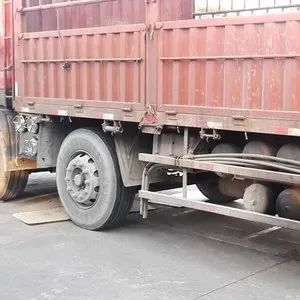
Pressure on the existing diesel fleet crossed borders. Shandong banned China-III trucks from city built-up areas on November 1 under a four-department notice, extending province-wide in 2027; one city reported 95 percent of its China-III fleet already scrapped, with just 165 vehicles left. Delhi barred non-BS-VI vehicles for three months from November 1, backing the ban with automatic plate readers and hundreds of enforcement staff. Vietnam’s Decree 101/2026/ND-CP placed old emission technologies on a restricted transfer list – the existing fleet gets a pass for now, but the direction is written. Bangkok launched half-price servicing at nine vehicle brands ahead of the dust season, aiming to cut PM2.5 exceedance days from 28 to under 20 in 2027. The United States joined the pattern from the regulatory side: the EPA’s proposed MY2027 correction would replace SCR torque derates with audible and visual alerts, keeping engines running closer to full power while compliance shifts to durability. Four markets, different tools, one landing point: keep the dirtiest vehicles off the road.
Sources of the week
Facts and citations for this week’s briefs (all links verified at publication): Henan’s two non-road moves (Xinxiang public notice; Zhengzhou subsidy scheme); the steel association’s Q3 release; the Dezhou and Linyi orange-alert notices; Shandong’s China-III truck ban (Lu-Huan-Zi [2026] No. 111 and the Jining notice); Vietnam’s Decree 101/2026/ND-CP briefing (VietnamPlus); Guangzhou’s non-road measures (Sui-Huan-Gui-Zi [2026] No. 8); EPA’s MY2027 correction (91 FR 43154); Dezhou’s ban briefing; cement idle-day divergence (Securities Times); Bangkok’s dust-season preparation (thais.com, Thairath); Chongqing’s performance-grading briefing (cq.gov.cn).
For equipment suppliers the three threads converge on one action: put high-temperature dust filtration and aftertreatment retrofits into this year’s budget – registrations expire, alerts return, and the filter-life ledger is written daily. Retrofit projects also now carry measurable payback: the tax steps and the graded alert rules both reward documented, stable low emissions rather than a single passing test. The truck exhaust purifier and non-road exhaust purifier lines from AIFILTECH serve precisely this fleet that has entered its countdown.