One permit, three pollutants, two verdicts: particulate matter stayed well inside its cap, while sulfur dioxide ran 1.62 times over the annual allowance and nitrogen oxides 2.51 times over. On November 9 the Zhangzhou ecology and environment bureau announced it had opened a case against a Fujian ceramic company for discharging beyond its permitted emission totals. Inspectors found the plant in normal production during a site visit on September 23, and the figures they pulled were not one bad day but a ledger covering November 1, 2025 to September 20, 2026 – close to a full year of totals. The basis is Article 179 of the Ecology and Environment Code; the case was filed on October 8.
The permit numbers frame the story: 19.22 tonnes a year allowed for SO2, 40.212 tonnes for NOx, 55.123 tonnes for dust. In roughly ten months the plant emitted 50.4 tonnes of SO2, 141.2 tonnes of NOx and 14.7 tonnes of dust. At that pace it burned close to three years of its sulfur dioxide allowance and three and a half years of its nitrogen oxide allowance inside a single year, while dust sat below a quarter of its line. Meeting concentration limits is not the same as staying inside the annual cap.
Compliant concentration, illegal total – how?
The two ledgers measure different things. Concentration limits govern how dirty the gas is at any moment, checked by continuous emission monitoring systems; permit totals govern how much is discharged across a year, settled through the pollution permit ledger. Enforcement in China has mostly circled the first ledger, and cases filed specifically for exceeding permitted totals, announced publicly, have been rare. Since the Ecology and Environment Code took effect, Article 179 makes exceeding permitted totals a standalone violation with its own penalty clause in Article 1103, and the Zhangzhou notice shows the annual account is now being settled on its own terms.
What should kiln operators watch now?
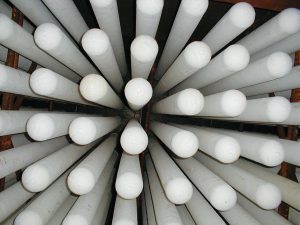
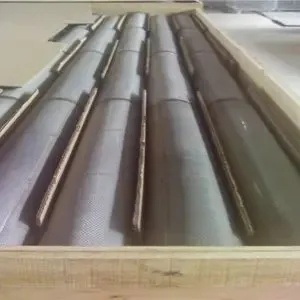
Permit allowances come from environmental assessment and total-quantity control targets, usually with headroom built in; running over points either to expanded output eating the margin or to a treatment gap. A 2.51-times NOx overrun is not solved by throttling production. On the treatment side, kilns fire at temperatures where thermal NOx dominates, and the gas-side answer is high-temperature filtration with catalytic denitration in one vessel – the approach AIFILTECH builds into its ceramic fiber filter tubes for ceramic and glass kilns, rated to 1,600 degrees C, with washable metal filter bags for other duty points. Dust compliance no longer closes the file; the sulfur and nitrogen balances now have to add up at year end too.