On 25 November 2026, Thailand’s House of Representatives approved the revised Clean Air Management Bill with 430 votes in favour and none against. The Senate takes up the same text on 30 November. Seven years after the first drafts entered parliament, the bill is one vote and one royal signature away from the statute books.
2019-2023: drafts without a budget
Parliament first took up comprehensive clean-air legislation in 2019, when recurring PM2.5 episodes made air quality a national political issue. Early drafts stalled over the fiscal burden of new agencies and a dedicated Clean Air Fund. The cabinet endorsed the environment ministry’s own draft in 2023, which gave the process a working text.
2024: 443 votes, seven bills
On 17 January 2024 the House accepted the principles of seven competing drafts by 443 votes — five from political parties, one from the cabinet, one citizen-led and backed by more than 22,000 signatures. The House completed its third reading in October 2025 and the Senate passed its own amended version within the same month. The two texts were no longer the same bill.
September 2026: the House says no
On 2 September 2026 the House rejected the Senate-amended version 414 to 2, and a 20-member joint committee took over. It settled every disputed clause at its 11th meeting on 17 November, accepting 54 of the Senate’s 92 amendments and adding about 50 changes of its own: provincial clean-air committees chaired by governors, the Clean Air Fund’s start delayed by one year, and pollutant-disclosure duties kept even after the PRTR clause was dropped to avoid overlap with a separate law now being drafted.
25 and 30 November: the last gates
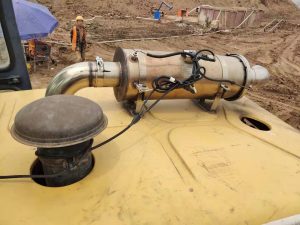
The revised bill now carries maximum fines of 25 and 50 million baht alongside fees built on the polluter-pays principle — instruments that will eventually price emissions for factories, fleets and construction sites across the country. The one-year delay on the Fund means enforcement is likely to phase in through 2027 rather than land all at once. The Senate votes on 30 November; if it agrees, royal assent and publication in the Royal Gazette follow, and with them the dates operators will actually plan around. For diesel fleets and industrial plants, retrofit options such as a ceramic filter tube dust collector for fixed sources or a road vehicle black smoke purifier for trucks remain the near-term lever while the fee schedule is still being written.