Last week (November 10-16) was dense for emissions governance on both sides of the world. Behind nine separate news items, the money is flowing toward three places: compliance for new machines, road access for old ones, and retrofits at industrial plants. Read together, the pattern is clearer than any single headline.
New standards for new machines, bans for old ones
On the new-machine side, several rulers tightened at once. China’s Stage V non-road draft cleared technical review on November 5: NOx for the 56-560 kW band drops from about 2.0 to 0.40 g/kWh, particle number gets its first limit – effectively mandating DPFs – and full implementation is proposed for around 2028. In the United States, the EPA 2027 heavy-duty NOx final rule is expected in December, cutting the limit from 0.20 to 0.035 g/bhp-hr. India, meanwhile, wrote tamper-resistance into the hardware of its PUC testing instruments.
For existing vehicles, three different tools are on the table. Yueqing and Taizhou port districts in Zhejiang have drawn low-emission zones for China IV trucks, effective January 4, 2027 – access as the lever. Thailand’s excise department has drafted a scrappage scheme: 6 billion baht, 40,000 baht per vehicle, 150,000 old pickups swapped – money as the lever. Delhi simply keeps non-BS-VI vehicles registered outside the city out – the border as the lever. Same goal, three instruments: enforcement, subsidy, exclusion. Cities inside China are meanwhile raising non-road walls on their own clock: Dezhou bans Stage I-and-below machines citywide from December 1, 2026, and Stage II-and-below from July 1, 2027. The national draft sets the floor; cities keep raising the walls.
Enforcement opens, retrofits close
The week’s industrial stories turned on total mass, not concentration. A ceramics plant in Zhangzhou emitted 50.4 tonnes of SO2 and 141.2 tonnes of NOx between November 2025 and September 2026 – 1.62 and 2.51 times its annual permits respectively – and was opened for investigation even though particulates were within limits. Under China’s new Ecology and Environment Code, meeting concentration standards no longer means compliance. Shandong’s six-agency action plan for building materials ties capacity freezes to kiln ultra-low emission upgrades, and the November 13 Opinion on local standards pushes limit-setting down to provinces and across borders.
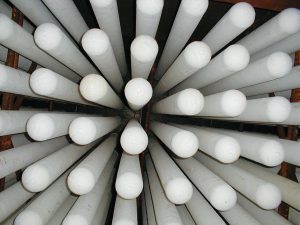
The retrofit side showed what an answer looks like. A 750-tonne-per-day waste-to-energy line in Jiangyou, Sichuan, combines SNCR, two dry stages, activated carbon and catalytic ceramic filter cartridges into one dust-and-NOx unit, dropping the standalone SCR and its reheating – a construction award worth RMB 130.4 million. Pilot results: 99.87 percent dust removal, 94.28 percent denitrification, with cartridge life of 5-8 years against 2-3 for SCR catalysts. The savings go beyond the initial price tag: fewer reheating losses, fewer changeouts, one procurement instead of three.
Penalties, fuel and one vote
The shipping bill is still open. Over the IMO net-zero framework’s penalty mechanism – central fund, owner-chosen projects, or refundable investment – 15 surveyed operators asked for something “meaningful and relatively simple”, and the December 4 vote needs a two-thirds MARPOL majority. The calendar is tight: the working group meets November 23-27, the Marine Environment Protection Committee November 30 to December 3, then the vote. The IEA ran two scenarios for marine biodiesel: nearly 2 billion liters by 2031 in the base case, more than 120 billion if the framework lands. Fuel capacity planning is already racing the vote.
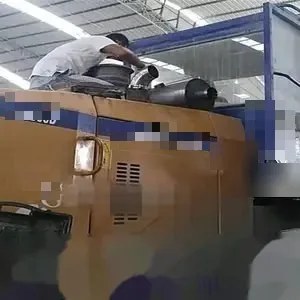
All three threads point to the same judgment: the faster new-machine standards move, the more certainty existing fleets, industrial total-mass accounting and transition fuels will need. Buyers can absorb a tight limit; what they cannot absorb is not knowing which limit, which year, which city. Orders for filter bags, catalysts and purification systems follow certainty, and last week’s news supplied it one thread at a time. AIFILTECH’s non-road black smoke purifiers and MULCERAFIL™ ceramic fiber filter tubes sit on two of these three lines.
Source list of the week
MEE: China Stage V non-road draft consultation (2026-06-18); HBZhan: Stage V technical review meeting report (2026-11-05); Yueqing Municipal Government: port-area China IV truck restriction; The Thaiger: Thailand pickup trade-in draft.
Zhangzhou Ecology and Environment Bureau: over-permit discharge notice (2026-11-09); BJX Waste-to-Energy News: Jiangyou line tender (2026-11-10); Shandong Provincial Department of Industry and IT: building materials action plan; MEE: Opinion on local environmental standards (2026-11-13); Safety4SEA (carrying IEA): marine biodiesel forecast; Balitang Marino: shipowner interviews on IMO penalty mechanism.