Whose limit applies to a cement kiln – the national standard, or the local one? On November 13, China’s Ministry of Ecology and Environment and the State Administration for Market Regulation jointly issued an Opinion on improving local ecological and environmental standards, building a framework in which both exist – and must fit together.
The document sets out ten measures in three areas. On the system side, local pollutant discharge standards must stay comparable and complementary with national ones in scope and indicator design, and provinces inside the same key region are encouraged to jointly draft cross-provincial coordinated standards. On quality, it demands the most feasible technical route at the least socioeconomic cost, with standards information kept public. On mechanisms, the two agencies will run a coordination mechanism, and provincial environmental and standardization departments a closed-loop process from drafting to review.
National sets the frame, provinces set the scale
The Opinion codifies what practice already does. Local standards have long run ahead of national ones: Mengdian Group’s cement line in Henan, profiled by Henan Daily on November 14, has pushed NOx from the national cap of 50 mg/m3 down to 30-40, then below 25 mg/m3 after an August retrofit, becoming the 22nd cement plant in China to clear ultra-low emission review.
For the treatment market, direction matters more than any single number. Each step a limit moves down forces a recalculation of filtration precision, catalyst life and stability at low load; with cross-provincial coordination, neighboring provinces’ kiln and boiler limits will converge, so retrofit designs stop differing border by border.
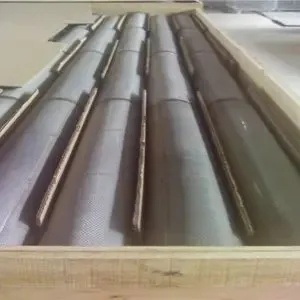
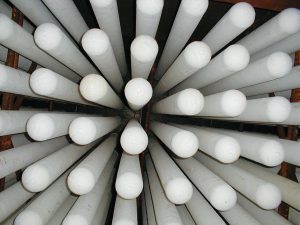
High-temperature flue gas filtration is the throat of such retrofits. AIFILTECH’s MULCERAFIL™ ceramic fiber filter tubes and metal filter bags serve 1600-degree-class hot gas streams and general industrial dust duty respectively, ready for kiln-end upgrades as local standards land.