One hundred and seventy-two technologies sit on Indonesia’s register of environmentally friendly equipment and processes. The environment ministry’s own position is that the number proves nothing about any of them yet.
On 17 November, at the COP31 talks in Antalya, ministry secretary Rosa Vivien Ratnawati said a ministerial regulation is being drafted so that technologies recognised by the government meet proven performance standards – in resource efficiency, renewable energy integration, and pollution prevention and reduction. The registry, she added, is meant to lower the cost of verifying a reduction and to give foreign investors a reason to trust domestic developers.
What counts as proof?
Not a specification sheet. The stated aim is that every environmental claim rests on scientific evidence, and that every tonne of reduction can be measured, traced and verified. For a dust collector that resolves into outlet concentration, pressure drop and power draw at a stated load – figures a buyer can re-check, not a number printed once in a catalogue.
Who does the measuring?
Indonesia’s national environmental laboratory network runs through 321 facilities, coordinated by the Center for Environmental Impact Control Facilities. That is the capacity the ministry plans to lean on. A network of that size also sets the pace: a verification queue is made of laboratories, not of intentions.
Why a register changes a tender
Registration is voluntary today. The direction is not. A technology that cannot document performance becomes awkward to name in a public tender and harder to defend when two bids are compared line by line. Permits set the limit; evidence decides who supplies the equipment that meets it.
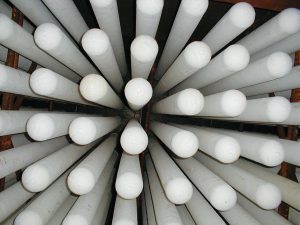
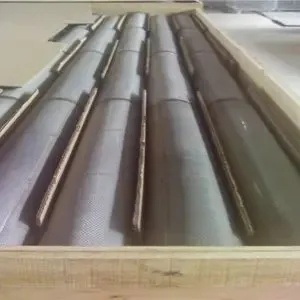
The gap is cheap to close. Ceramic fiber filter tubes and sintered metal filter cartridges both hold their numbers across years of service, which is the kind of record a scheme this shape asks for – baseline pressure drop at commissioning, quarterly readings, a cleaning log.
Nothing is in force yet. A draft regulation, 172 entries, 321 laboratories. But the ministry has now said out loud what it wants: claims that survive a laboratory, not a brochure.