
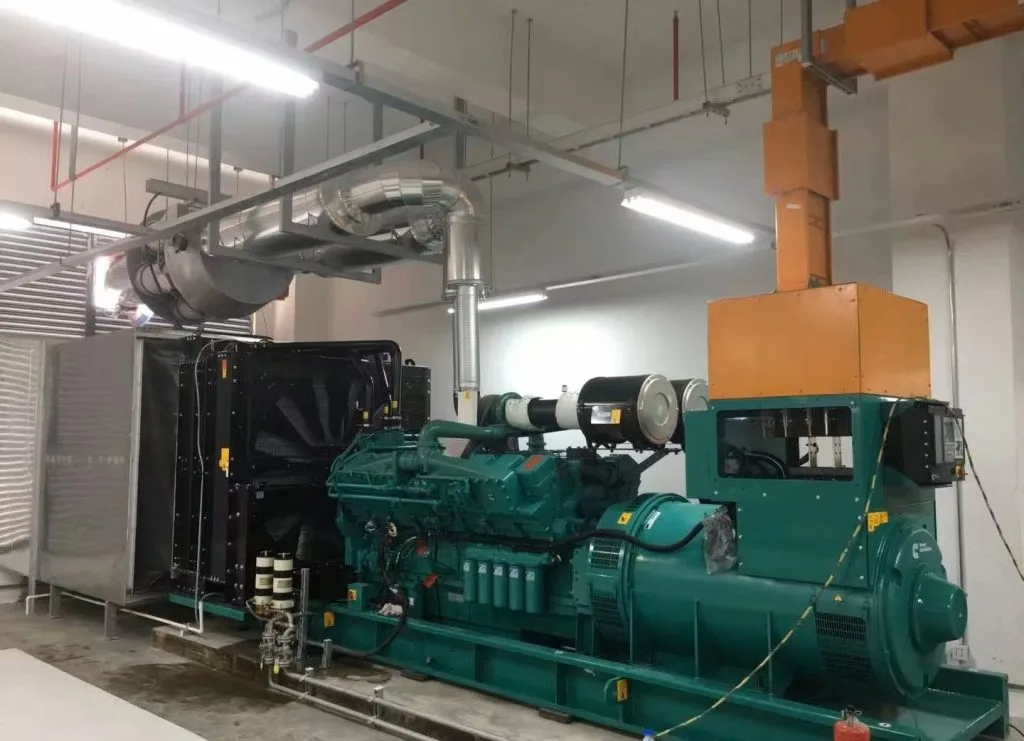
Diesel Generator Exhaust Purifier FAQ: 22 Questions on Sizing, Installation, Bypass and Maintenance
How many elements for a given kW? Can the unit be hung when the room has no floor space? When does a bypass valve open by itself, and how do backpressure and valve-position signals reach the plant room control system? These 22 questions are the ones diesel generator set users at data centers, hospitals, factories and telecom rooms ask most often when selecting, installing, controlling and maintaining an exhaust purifier. It follows the diesel exhaust purifier FAQ: 36 questions and the answers are based on AIFILTECH genset exhaust purification project documentation and field experience.
Jump to a question: every entry below links to its answer.
All 22 questions at a glance
- 1. My generator set is rated at a certain kW. How many elements should the purifier have?
- 2. Which exhaust flow suits the 4, 6, 12, 18 and 20-element models?
- 3. What happens to backpressure, cleaning interval and unit size when element count goes up?
- 4. Can the purifier deal with heavy smoke from a cold standby start straight away?
- 5. How should maintenance differ between continuous, short daily and monthly test-run sets?
- 6. Can one purifier serve several generator sets?
- 7. With several sets running in parallel, how is flue gas kept from flowing back into an idle set?
- 8. Can the purifier replace the original silencer? Will it change the noise level in the plant room?
- 9. Where should the purifier go if the original silencer stays?
- 10. Cylindrical, box-type or suspended: which fits which plant room?
- 11. The plant room has no floor space. Can the unit be hung? How are load and maintenance calculated?
- 12. How hot does the outside of the purifier get? Does it need insulation and burn protection?
- 13. Who takes the pipe’s thermal expansion, vibration and weight? Is a separate support needed?
- 14. Are bellows, flanges, supports and insulation included in the supply?
- 15. With a bypass butterfly valve, when does the system switch over automatically?
- 16. Does an opened bypass raise an alarm and leave a record?
- 17. If a valve, sensor or controller fails, is the emergency power supply at risk?
- 18. Can backpressure, temperature and valve-position signals be integrated into the plant room control system?
- 19. Are Modbus, dry contacts or other communication interfaces supported?
- 20. How should a plant room with no washing water be maintained?
- 21. Can automatic or central washing equipment be supplied?
- 22. Does cleaning require a shutdown? For how long?
1. Sizing and element count
1. My generator set is rated at a certain kW. How many elements should the purifier have?
Element count cannot be read off the kW figure. Start with engine displacement, rated and typical load, maximum exhaust flow, exhaust temperature and the allowable backpressure, then calculate from the design flow per element and check installation space and ash capacity. Engines of the same rating can need different configurations, so a formal quotation should map engine model to design flow, element count and design backpressure.
2. Which exhaust flow suits the 4, 6, 12, 18 and 20-element models?
The flow each element count suits depends on the single-element specification, media, design filtration velocity and allowable pressure drop; there is no range that holds across models. The practical tool is a sizing table with maximum actual exhaust flow on one axis, constrained by clean and pre-cleaning backpressure, listing outline and connections alongside. Until the engine data are confirmed, a power-to-element-count cross-reference is for budgeting only; model pages such as the 20-core large dry genset black smoke purifier give outline and connections, not a flow promise.
3. What happens to backpressure, cleaning interval and unit size when element count goes up?
With total exhaust flow unchanged and the flow field evenly split, more effective filtration area usually lowers flow per element and the initial pressure drop, holds more soot and lengthens the maintenance interval. Casing size, weight, cost and maintenance space grow with it. Uneven flow distribution erodes the gain, so confirm it with a whole-unit backpressure test and the maintenance cycle.
4. Can the purifier deal with heavy smoke from a cold standby start straight away?
Physical capture in a filtration DPF works from cold start; it does not wait for SCR light-off temperature. Cold-engine combustion, oil droplets and engine faults do affect how heavy the smoke is and how fouled the element becomes. Catalytic oxidation and SCR are limited at low temperature. From AIFILTECH’s extensive use of metal DPFs on generator sets, a specific pre-treatment of the metal DPF is normally all it takes for it to clean up cold-start smoke.
2. Operating regimes and multiple sets
5. How should maintenance differ between continuous, short daily and monthly test-run sets?
Continuous sets are cleaned by running hours, backpressure and ash trend. Short daily runs call for attention to repeated cold-start soot and low exhaust temperature. Monthly test-run sets should log start smoke, backpressure and run time at every start, with checks for moisture, corrosion and sealing before and after long idle periods. Calendar reminders only prevent a service being forgotten; whether to clean is decided by backpressure and element condition, with thresholds per the model’s manual. Inspection frequency, minimum test load and storage requirements for the three regimes are confirmed per model. The regulatory status and applicable standard of a standby or emergency set are confirmed case by case with the local ecological and environment authority.
6. Can one purifier serve several generator sets?
A shared unit can be assessed, but it must be designed for the largest simultaneous total flow, the different load combinations and the allowable backpressure, with reliable anti-backflow, isolation and maintenance measures. One-duty-one-standby arrangements, parallel changeover and the low-flow condition when a single set starts all count. Where operating combinations are complex, one unit per set is usually easier to isolate and maintain.
7. With several sets running in parallel, how is flue gas kept from flowing back into an idle set?
Fit suitable isolation or non-return measures on each set’s branch, and prevent backflow through valve-position interlocks, shut-off sealing, pipe slope and pressure balancing. Valves must be temperature-rated, low-leakage and easy to service, and the control logic should cover start, stop, fault and power-loss states. Verify with duct pressure and valve-position tests across each operating combination.
3. Installation, noise, load-bearing and supply scope
8. Can the purifier replace the original silencer? Will it change the noise level in the plant room?
Replacement has to be verified on two counts separately: exhaust backpressure and acoustics. The volume and elements of a purifier do provide some silencing, but the original silencer rating cannot be promised without testing. If the silencer is replaced, measure noise inside and outside the plant room and at the site boundary and check local requirements. Where the limit is not met, keep or add a silencing device and recalculate backpressure. The genset emissions application page covers how standby and continuous sets are configured differently.
9. Where should the purifier go if the original silencer stays?
Position is decided from exhaust temperature, backpressure, maintenance space, noise and pipe thermal expansion. A purifier close to the engine holds temperature better but makes the front section harder to lay out; placing it before or after the silencer changes acoustics and resistance either way. Compare measured exhaust temperature, total backpressure and maintenance access for both layouts before deciding, and give the purifier its own support.
10. Cylindrical, box-type or suspended: which fits which plant room?
A cylindrical unit suits rooms with enough axial pipe run and a wish for a compact outline. A box type integrates multiple elements and allows side access, which suits a regular equipment area. A suspended unit suits rooms with no floor space but a reliable ceiling load path, lifting points and clear height below. Whatever the shape, keep the space for element withdrawal, valve operation and insulation thickness.
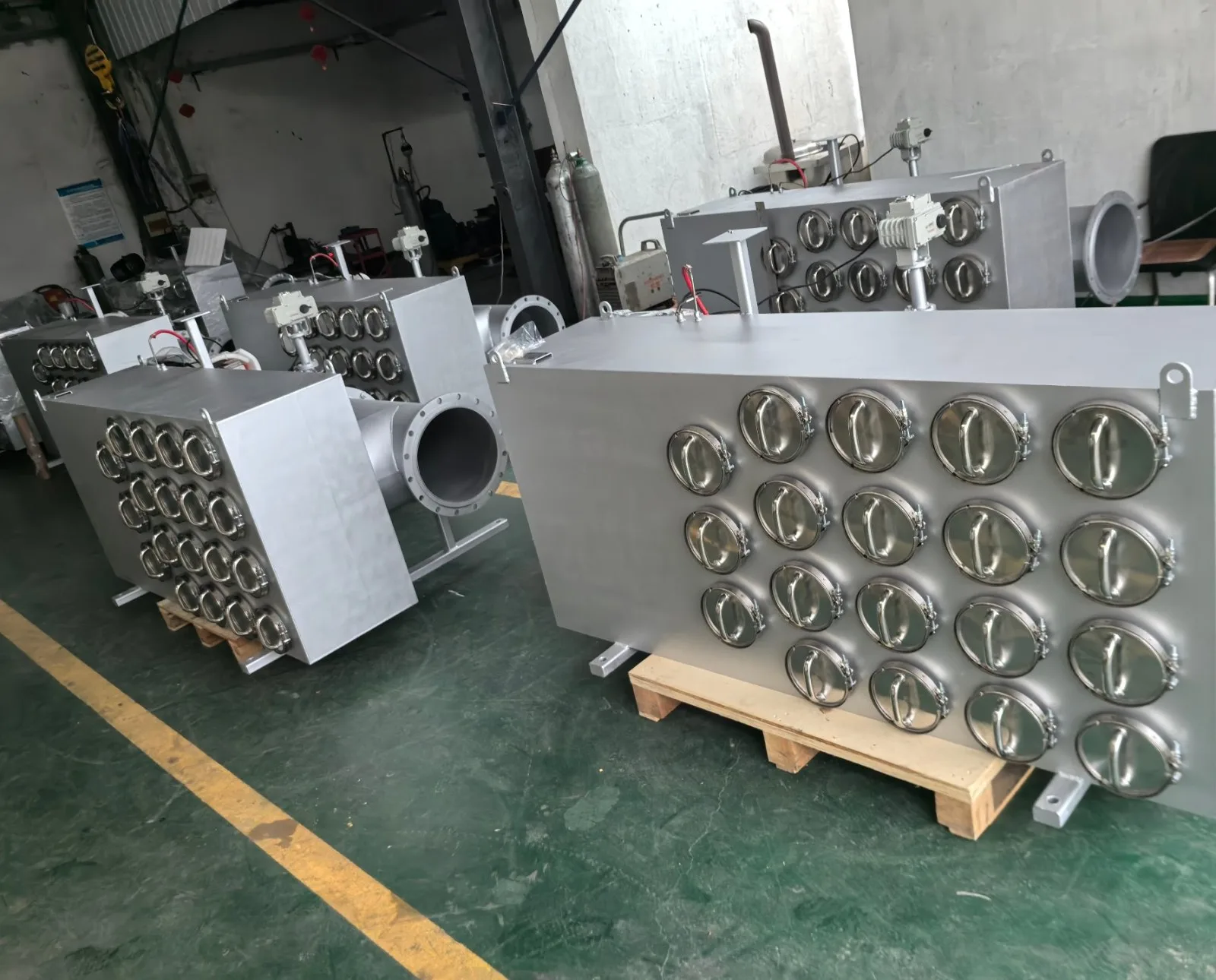
11. The plant room has no floor space. Can the unit be hung? How are load and maintenance calculated?
Suspension can be assessed, but the total load must be built from operating weight, insulation, fittings, accumulated ash and maintenance loads, with vibration, thermal expansion and a safety factor added, and checked by a qualified structural engineer against the beam, lifting points and brackets. Fall protection, a platform where needed and a safe element-handling path are also required. The weight must not be left to the exhaust pipe to carry.
12. How hot does the outside of the purifier get? Does it need insulation and burn protection?
Surface temperature depends on exhaust temperature, casing, insulation thickness, ambient air movement and load; it cannot be read off the exhaust temperature. Calculate or measure it at the worst steady-state condition, and set insulation, guard mesh, warning signs and safe distances according to contact risk on site. Removable parts also need attention to residual heat and exposed hot components during maintenance. AIFILTECH provides insulation suited to the owner’s temperature requirement; the cylindrical insulated genset purification system is one typical build.
13. Who takes the pipe’s thermal expansion, vibration and weight? Is a separate support needed?
The purifier and pipework normally need their own supports; the engine exhaust outlet and light-gauge flanges should not carry the weight. The design should calculate thermal movement and provide suitable supports, guides and flexible connections while isolating engine vibration. Before purchase, agree who supplies the unit brackets, who does the site steelwork, and who installs and checks the structure.
14. Are bellows, flanges, supports and insulation included in the supply?
These accessories are defined by the project list and are not all included by default. A quotation lists bellows, companion flanges, gaskets, fasteners, independent supports, insulation and outer cladding item by item with specification, quantity, material and installation responsibility, and states the site interface tolerances. Any site fabrication or re-insulation not listed should be assigned explicitly.
4. Bypass, alarms and signal integration
15. With a bypass butterfly valve, when does the system switch over automatically?
Automatic changeover logic is agreed in the project control specification and may be based on high backpressure, abnormal temperature, actuator fault or maintenance isolation. Emergency sets also need a defined safe position on power loss, usually the position that protects the power supply. A bypass is not a way to evade emission control long term: opening it should raise an alarm and be logged, and it must comply with the regulations and the owner’s requirements on site. Whether a bypass is allowed at all, and its compliance boundary, is confirmed per target market before quoting.
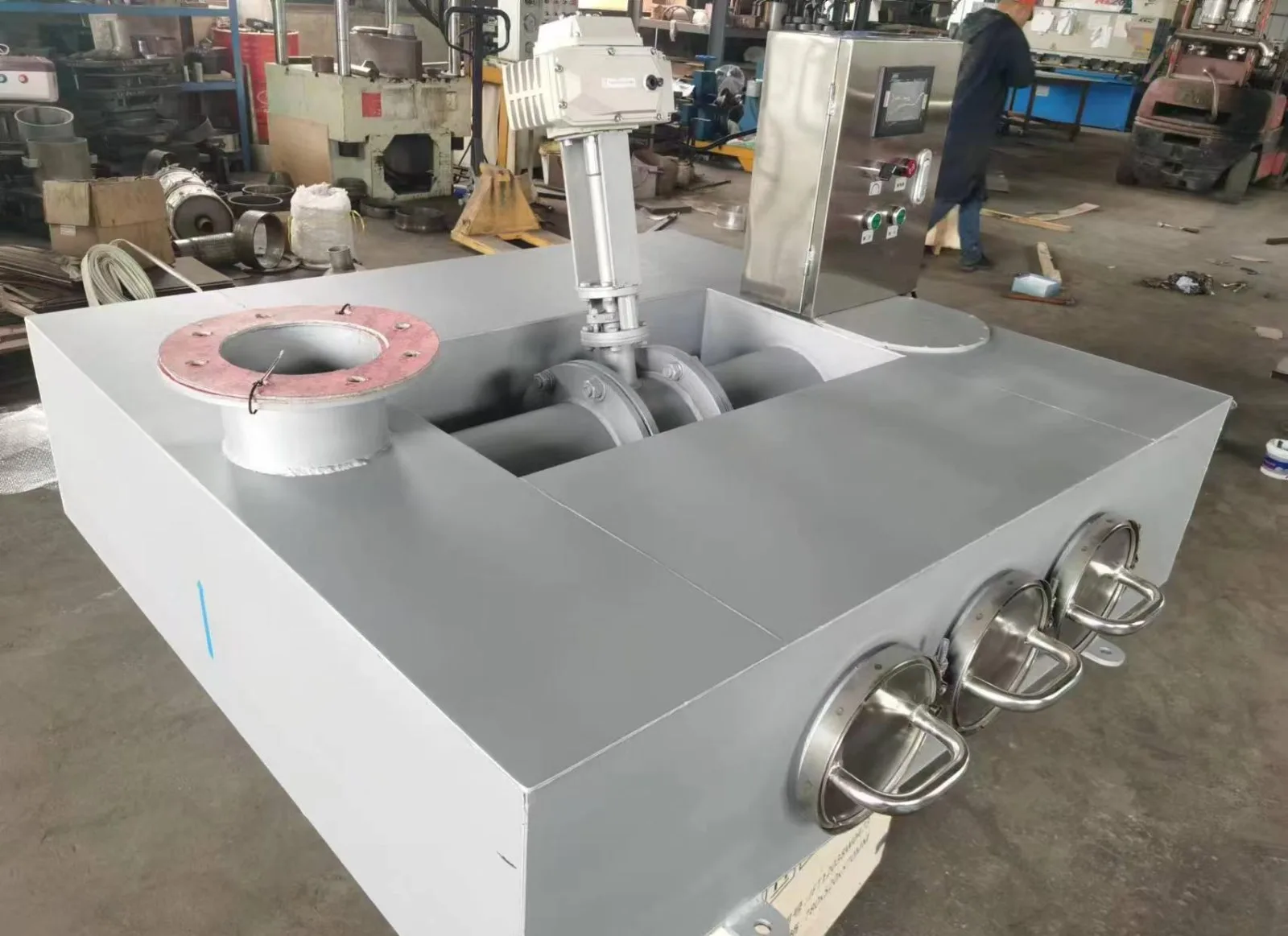
16. Does an opened bypass raise an alarm and leave a record?
A local audible-visual or dry-contact alarm is recommended, logging opening time, duration, cause, backpressure and valve position for operations and compliance traceability. Where the system has a controller, the event history can be exported; with a mechanical valve only, an extra position switch and recording device are needed. The exact functions depend on the control package purchased.
17. If a valve, sensor or controller fails, is the emergency power supply at risk?
The design goal is that faults are diagnosable and an aftertreatment fault does not needlessly block the emergency supply, but a blanket “never affects it” cannot be promised. Failure modes such as extreme backpressure rise, valve misposition, power loss and sensor drift must be analysed, with suitable safe positions, manual operation, alarms and any necessary mechanical protection, then rehearsed in a fault drill.
18. Can backpressure, temperature and valve-position signals be integrated into the plant room control system?
Yes, through the sensors and controller supplied, typically as analogue, digital or industrial bus signals. Signal type, range, power, isolation, cabling and the point list should be fixed early. After integration, verify alarm thresholds, broken-wire diagnosis and read/write rights in the room system; “supports remote monitoring” on its own is not enough.
19. Are Modbus, dry contacts or other communication interfaces supported?
Modbus, dry contacts or other industrial interfaces can be offered as project options, subject to the controller model. The technical agreement should state the physical interface, protocol version, baud rate, register map, analogue specifications, alarm contact rating and the comms-failure state. Where Ethernet or cloud functions are wanted, cyber security and data ownership are confirmed separately.
5. Cleaning and downtime
20. How should a plant room with no washing water be maintained?
Keep spare elements and send dirty ones to a central washing point with water, drainage and waste-water collection; in the room only dry removal, refitting and condition checks are done. Mobile washing equipment can be assessed too, but carbon-laden waste water must not simply be discharged in the plant room. Build transport, washing, drying and spare-element turnaround into the maintenance plan at the selection stage.
21. Can automatic or central washing equipment be supplied?
Where there are many units, downtime is costly or the plant room has no water, central or automatic washing can be assessed.
22. Does cleaning require a shutdown? For how long?
Models that are removed for washing normally need a shutdown with full cooling and isolation before work. With dual or standby purifier units, the changeover can cut downtime within compliance limits. Total time covers cooling down, removal and refitting, washing, thorough drying and a return-to-service test, not just the spray time. Rotating spare elements greatly shortens the on-site wait; the steps are in the metal DPF maintenance guide.
Related products and further reading
- Diesel Generator Black Smoke Purifier — The main model for complete genset purification
- Multi-Core Metal Filter Dry Purifier — Multi-core dry configuration
- Cylindrical Diesel Generator Exhaust Gas Purifier — A compact build where axial pipe space allows
- 4-Core Hoisting-Type Genset Exhaust Purifier — A suspended option where there is no floor space
- 12-Core Diesel Generator Exhaust Gas Purifier with Bypass Butterfly Valve — Bypass valve paired with emergency power
- Genset Exhaust Purification Control Valve Unit — Valve position, alarms and signal integration
- Genset Exhaust Bellows Piping System — Thermal expansion, supports and piping supply
- Genset Emissions: Why Low Load Kills a Retrofit Filter — Standby versus continuous set configuration
- Diesel Exhaust Purifier FAQ: 36 Questions on Sizing and Metal DPF — The first 36 questions on sizing method and metal DPF
- Metal DPF Maintenance Guide — Washing steps, cleaning intervals and troubleshooting
- DOC+DPF+SCR+ASC and Other Technology Routes: Purifier FAQ, 18 Questions — When SCR is required, the temperature window and the urea system
- Forklift, Construction, Farm and Airport Vehicle Exhaust Purifier FAQ: 15 Questions — Fitting dimensions, salt-fog materials and inspection compliance for mobile machines
Question not covered here? Send the genset model, rated power, exhaust pipe diameter and a photo of the plant room, and we will run a sizing check on the figures first.
Bruce Wen · +86 188 1936 6808 (mobile / WhatsApp / WeChat) · bruce.wen@aifiltech.com